How to Find More Wildlife: Why Most People Look for Wildlife the Wrong Way
Why finding food, water and shelter will help you see more wildlife than searching for animals ever will
Most people think finding wildlife starts with looking for animals.
It sounds obvious enough. If you want to see a deer, you look for a deer. If you're hoping to find a fox, your eyes scan the field margins and hedgerows. If you're searching for an otter, you walk a riverbank or canal towpath hoping to catch sight of movement on the water. For years that was exactly how I approached wildlife watching and photography, and for years I was often frustrated by how little I seemed to find.
Then, gradually, I realised that many of my best wildlife encounters had happened when I wasn't really looking for the animal at all.
One morning several years ago I was standing beside a canal before sunrise. It was early March, bright but bitterly cold, the sort of morning where winter still had a firm grip on the landscape despite spring waiting just around the corner. Frost lingered in the shadows and every breath drifted away across the water as a cloud of vapour.
The canal itself was around thirty feet wide and fairly typical for much of its length, with extensive reed beds lining the far bank. What interested me, however, wasn't the main channel but a large shallow pool that branched away from it. The pool was surrounded on three sides by dense reeds and connected to the canal by a relatively narrow opening perhaps fifteen or twenty feet wide.
I'd spent enough time at the site to know that this opening acted almost like a bottleneck. Local anglers certainly seemed to think so. Whenever I visited there always seemed to be one or two fishermen occupying the same stretch of bank and, after stopping to chat over the years, I began to understand why. Shoals of roach and bream regularly moved through the gap into the shallower water beyond, where the combination of shelter, slightly warmer water and plentiful food attracted large numbers of fish.
That morning the fish were there in abundance.
Even from some distance away I could see flashes of silver beneath the surface as shoals moved through the opening. Every so often the water would erupt with activity before settling once more, and it was obvious that hundreds of fish were concentrated in a surprisingly small area. The pool beyond offered shelter and feeding opportunities, but the narrow entrance effectively funnelled everything through a gap little wider than a country lane.
Standing there, watching the movement of the shoals, I remember thinking that if I were an otter, this is exactly where I would choose to hunt.
The fish were concentrated. The approach routes were predictable. Dense reed beds offered excellent cover. Rather than searching miles of canal in the hope of encountering prey, an otter could simply position itself near the bottleneck and wait for opportunities to present themselves.
At that point I hadn't seen an otter.
There were no fresh footprints in the mud and no obvious signs suggesting one was nearby. Yet everything about the location felt right. The more I watched, the more it seemed that the landscape had arranged itself into an almost perfect feeding opportunity for a fish-eating predator.
An hour later an otter appeared……..then another. Over the course of the morning I enjoyed some of the best otter watching I've ever experienced, not because I had found the otters themselves, but because I had first recognised the conditions that made otters likely.

Why Wildlife Is Easier to Predict Than It Is to See
Looking back, that morning taught me something important about how to find more wildlife.
Most people spend their time searching for animals, yet animals are often the hardest thing in the landscape to find. The clues are usually far easier to spot than the creature itself, and very often those clues tell us exactly where we should be looking. You can read more about how animals move through the landscape and the clues they leave behind here.
The breakthrough for me came when I realised that experienced naturalists are often not looking for animals at all. Instead, they're looking for the things animals need. Food. Water. Shelter. Safe routes through the landscape. In many ways, wildlife fieldcraft is simply the process of recognising these resources and understanding how they influence the decisions animals make every day.
Every wild creature, from a wren to a pine marten, spends its life solving the same basic problems. It must find enough food to sustain itself, enough water to survive and enough shelter to avoid both predators and the worst of the weather. Because these needs influence almost every decision an animal makes, they also provide us with an extraordinarily useful way of finding wildlife.
Learn to identify those resources within a landscape and you'll often know where the animals are long before you actually see them.
The otters were never really the story that morning. The story was the shallow pool, the dense reed beds surrounding it, the narrow bottleneck connecting it to the canal and the concentrated shoals of fish moving predictably through that gap. Had I arrived after the otters had left, all of those clues would still have been there. The landscape itself was explaining why an otter might be present long before an otter actually appeared.
Once you begin thinking in those terms, you start seeing similar patterns everywhere.
Learning to Read the Landscape
One of the most common mistakes I see people make is assuming wildlife uses every part of a landscape equally. At first glance that seems reasonable enough, particularly in places such as large pasture fields where one area appears much like another, but wildlife rarely distributes itself at random. Animals tend to concentrate around specific features that provide some advantage, whether that is food, water, shelter or safety. You can read more about micro habitats here.
Brown hares provide a good example. People often describe hares as animals of open farmland, which is certainly true, but spend enough time watching them and you begin to notice that they often favour particular parts of a field. One corner may hold several hares while another, seemingly identical area remains empty. The reason is usually that subtle differences exist which are not immediately obvious to us. Perhaps the vegetation is slightly more nutritious. Perhaps the ground remains drier after rain. Perhaps visibility is better. Perhaps there is easier access to neighbouring fields.
Whatever the reason, the hares are responding to conditions and resources rather than occupying the landscape at random.
When I arrive somewhere new, I rarely ask myself where the animals are. Instead I ask where I would be if I were a hare, a fox or a roe deer. Where is the best food? Where can I remain hidden? How would I move through the landscape while exposing myself to the least possible risk? Those questions often tell me far more than simply scanning the horizon and hoping something appears.
The longer I spend watching wildlife, the more convinced I become that food is usually the best place to start. Every animal must eat and because food cannot hide, it often provides our first clue to what is happening around us. A hedgerow laden with blackberries is not simply a hedgerow. An oak tree carrying a heavy crop of acorns is not merely part of the scenery. A field margin rich in wildflowers is not just a colourful feature of the countryside. Each of these resources acts like a magnet, drawing wildlife towards it in predictable ways. The interesting thing is that food often leaves evidence behind.
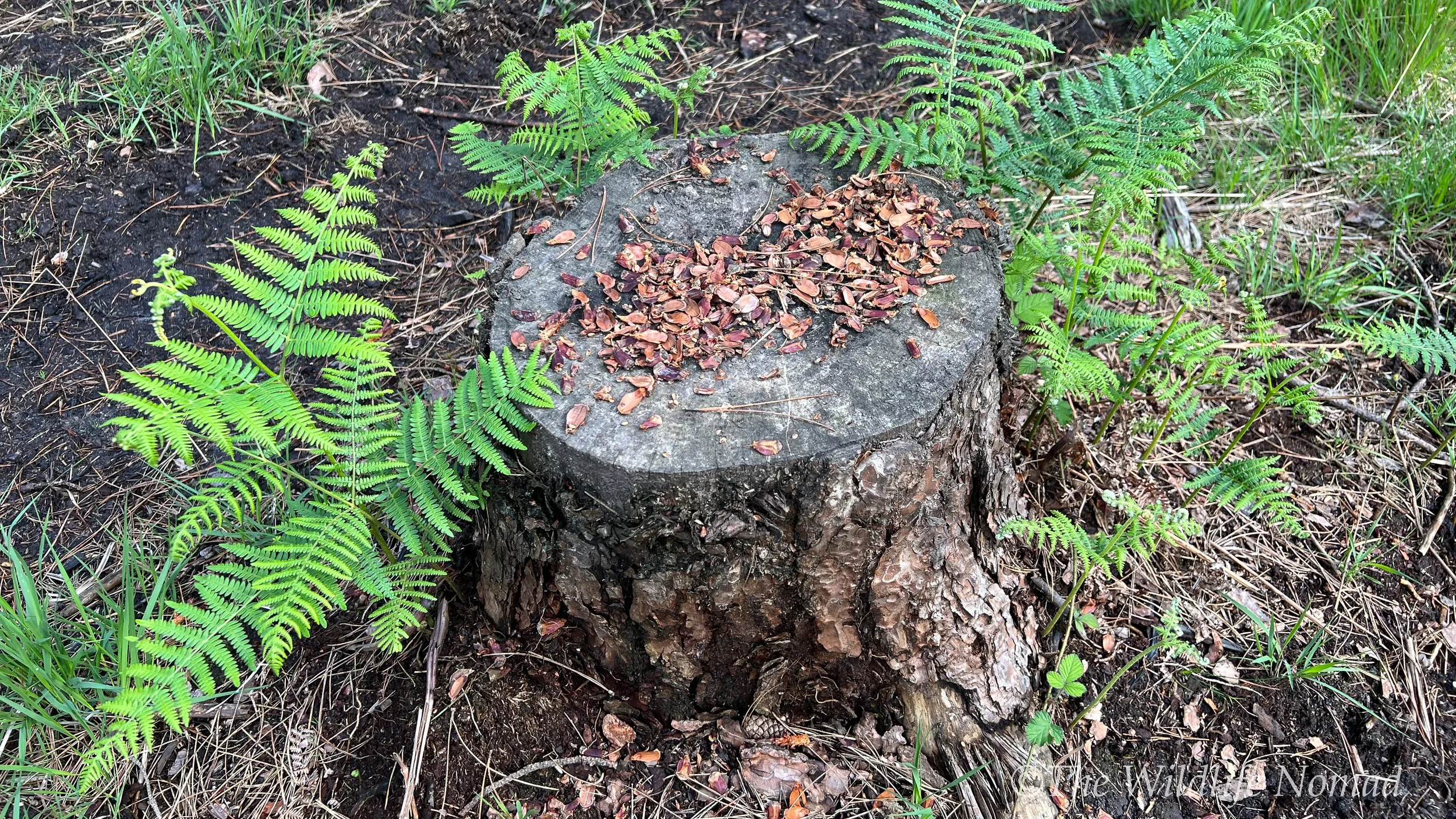
Long before you see a deer, you may notice freshly browsed shoots. Before you encounter a badger, you might find a patch of ground where earthworms have been dug from the soil. Before you ever glimpse a Fox, you may discover rabbit fur in a scat on a favourite route through the landscape.
The animal may be absent, the evidence remains.
This is one of the reasons experienced naturalists often appear to have a sixth sense for finding wildlife. In reality, they are often reading clues that other people walk straight past. They notice the feeding signs before they notice the animal. They spot the track before they see the deer. They find the route before they find the traveller.
Water works in much the same way. A line of willow trees crossing a field, a patch of rushes, a stand of alder or a strip of unusually lush vegetation during a dry spell can all reveal the presence of moisture. Animals need water just as surely as they need food and, once you begin recognising where it occurs within a landscape, you gain another valuable clue about where wildlife is likely to spend its time.
Shelter is equally important. Many species spend surprisingly little time in the open. Instead, they move along hedgerows, woodland edges, drainage ditches and strips of rough vegetation that allow them to travel while remaining concealed. These features are the wildlife highways that connect food, water and shelter together.
This is where wildlife fieldcraft begins to feel less like wildlife watching and more like detective work. Every track, feather, footprint, scat, feeding sign or well-used animal path becomes another piece of evidence that helps us understand how a landscape is being used. Individually, each clue tells only part of the story. Together, they begin to reveal how wildlife moves through the world around us.
The wonderful thing is that none of this requires expensive equipment. You don't need a thermal camera, a £4,000 lens or even a wildlife sighting. More often than not, the information you need is already there in front of you. You simply need to slow down and pay attention.
Most landscapes are constantly broadcasting information about the wildlife that lives there. The problem is that we have trained ourselves to look for the animal rather than the evidence.

How to Find More Wildlife on Your Next Walk
Imagine I dropped you into an unfamiliar landscape and challenged you to find roe deer.
You could spend hours scanning every field, woodland edge and hedgerow, hoping that eventually one would appear. Alternatively, you could begin by identifying the best feeding areas, the safest cover and the routes connecting them. One approach relies heavily on luck. The other uses the animal's needs to narrow the search area dramatically before you've even raised your binoculars.
That, ultimately, is the difference. The first approach asks, "Where is the animal?" The second asks, "Why would the animal choose to be here?"
At its heart, wildlife fieldcraft is nothing more complicated than learning to answer that second question.It may sound like a subtle distinction, but in practice it changes everything.
The next time you head outdoors, try a small experiment.
For the first ten minutes, don't look for wildlife at all.
Instead, look for food. Look for water. Look for shelter. Look for movement corridors. Ask yourself what species might use those resources and why.
By doing so you'll begin to see the landscape through different eyes. The countryside will stop being a collection of fields, hedgerows and woodlands and start becoming a network of opportunities and constraints that shape the lives of the animals living there, and when that happens, something remarkable occurs. Wildlife becomes easier to find.
Not because there is suddenly more of it, but because you've finally started looking for the things that matter most. The animals, more often than not, are simply following the clues.
If you’re new to wildlife fieldcraft, these are some of the most common questions people ask when trying to find more wildlife and understand animal behaviour:
Frequently Asked Questions
Why can’t I find wildlife when other people seem to see it easily?
Finding wildlife is rarely about luck. Experienced wildlife watchers often spend less time searching for animals and more time looking for the resources animals depend upon, such as food, water, shelter and safe travel routes. By learning to recognise these clues, you can dramatically increase your chances of seeing wildlife.
What is wildlife fieldcraft?
Wildlife fieldcraft is the skill of understanding how animals use a landscape. It involves reading signs such as tracks, feeding evidence, droppings, movement corridors and habitat features to predict where wildlife is likely to be found. In many cases, wildlife fieldcraft allows you to find animals long before you actually see them.
What is the best time of day to find wildlife?
Early morning and late evening are often the most productive times because many species are more active during these periods. However, understanding where animals are likely to feed, drink or travel is usually more important than the exact time of day. A well-chosen location at midday can often outperform a poor location at dawn.
How do I learn to read a landscape for wildlife?
Start by identifying the four things every animal needs: food, water, shelter and safe movement routes. Look for fruiting trees, ponds, streams, hedgerows, woodland edges and well-used animal paths. Over time, you’ll begin to recognise patterns that reveal how wildlife moves through the landscape.
Do I need expensive equipment to find more wildlife?
No. Binoculars can be useful, but the most important tool is observation. Many of the clues that reveal wildlife, such as tracks, feeding signs, droppings and movement corridors, can be found without specialist equipment. Learning to slow down and pay attention is often far more valuable than buying a new camera or lens.
Here are some links to other blog posts that will be of interest:
Who’s Poo Is This? A Fieldcraft Guide to Identifying UK Mammal Scats Using the POOPS Method.
Tracking After Rain: How to Read and Photograph Animal Tracks for Wildlife Photography and Watching.
Reading the Nibbles: How to Identify Wildlife from Feeding Signs in the UK.