Field Notes #1: Jacques Bibinet
The Art of Listening Before You Photograph
Field Notes is an occasional interview series from The Wildlife Nomad, exploring the experiences, insights and fieldcraft of wildlife photographers, naturalists, ecologists and conservationists. Through conversations with people who spend their lives observing the natural world, the series uncovers practical wildlife watching techniques, memorable encounters and the lessons that only time spent in the field can teach.
“To photograph is to listen to the silence of the living world, and give it a voice.”
Jacques Bibinet, Swiss Wildlife Photographer
There is a tendency in modern wildlife photography to assume that better photographs come from better cameras.Spend enough time online and it is easy to believe that success lies somewhere between the latest camera body, a longer lens, a more remote location, or an image dramatic enough to stand out amongst the endless stream of wildlife photographs appearing on social media each day. The conversation often revolves around equipment, techniques and results. Far less frequently does it revolve around patience, restraint, uncertainty, or the simple act of paying attention.
Speaking with Swiss wildlife photographer Jacques Bibinet is a reminder that the latter may matter far more than the former.
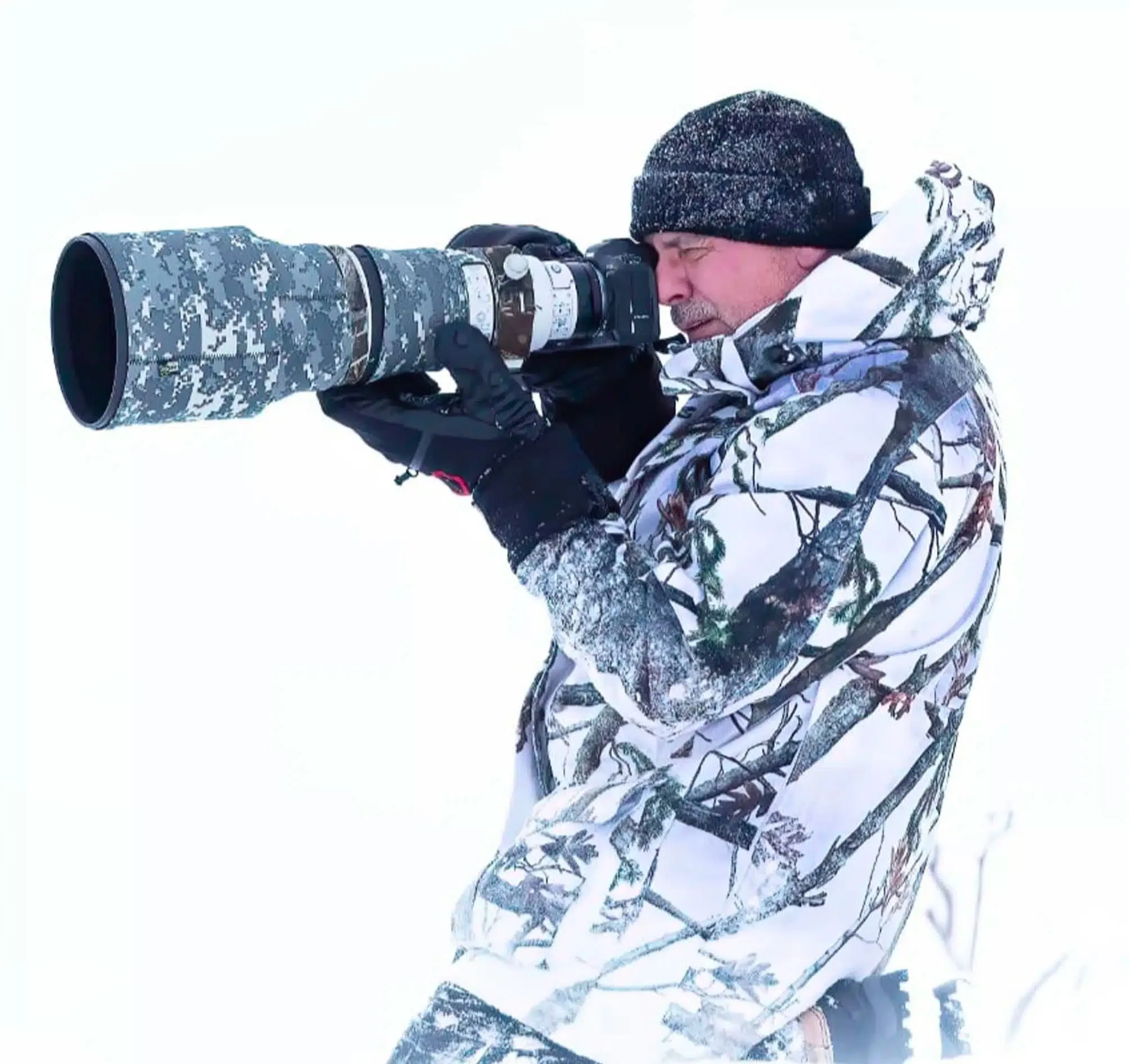
Based in the canton of Valais, Jacques has spent years exploring the forests, mountains and wild places of Switzerland. His photographs have been exhibited in galleries, recognised internationally, published in the Swiss press, and even used by KORA as part of Switzerland’s wolf monitoring programme. Yet what struck me most during our conversation was not a discussion about photography at all. Instead, we found ourselves talking about observation, animal behaviour, ethics, curiosity, and the increasingly rare skill of learning how to truly see.
His personal motto perhaps explains why.
“To photograph is to listen to the silence of the living world, and give it a voice.”
It is an elegant sentence, but after speaking with Jacques, it becomes clear that it is more than a slogan. It is a philosophy that runs through every aspect of his work.
His relationship with nature began long before photography entered his life. When he was around twelve years old, following his parents’ separation, weekends became an opportunity to escape into the Swiss countryside with his mother. Almost without exception, they would go walking. There was no grand plan behind these outings, no formal lessons or wildlife surveys. They simply spent time outdoors together, week after week, season after season.
Looking back, Jacques sees those years as foundational. It was there, amongst forests, fields and mountain paths, that his relationship with the natural world first took shape.
“I learned to love nature simply by being there,” he told me. “Not through books or school, but through spending time outside in all weathers.”
Photography arrived later, around the age of eighteen, although wildlife had little to do with it at first. For many years the two passions remained separate. Only later would they eventually converge, creating the approach that now defines his work.
What is perhaps most interesting is that Jacques still describes photography as secondary to observation. The camera serves a purpose, certainly, but it is not the reason he goes into the field. The reason is understanding.
That distinction becomes particularly apparent when discussing beginners.
Ask Jacques what new wildlife photographers most often misunderstand and he does not hesitate.
“The most common misunderstanding is simple,” he says. “Beginners focus on making a photograph.”
At first glance, the statement seems obvious. Of course photographers focus on photographs. Yet the more he explained, the more I found myself nodding in agreement.
Many newcomers arrive in the field already thinking about outcomes. They think about lenses, settings, compositions and potential images. They arrive searching for photographs rather than seeking understanding. In doing so, they often overlook the very thing that makes successful wildlife photography possible in the first place.
“They don’t yet know the animal they’re trying to photograph,” Jacques explains. “Its habits, its rhythms, what makes it nervous, what makes it curious.”
His advice is both simple and surprisingly radical.
“If I had to give one piece of advice, it would be this: out of ten outings, go nine times with only binoculars and come back with the camera on the tenth.”
In an era dominated by content creation, that suggestion feels almost rebellious.
Spend nine visits observing. Learn the landscape. Understand the animal. Study its behaviour. Only then bring the camera.
The more we spoke, the more I realised that this philosophy sits at the heart of everything Jacques does. Photography, for him, is not a shortcut to understanding. It is a by-product of understanding.
Perhaps nowhere was that clearer than when our conversation turned to wolves.
Few animals provoke stronger reactions across Europe. Wolves exist at the centre of passionate debates about conservation, farming, rural communities and rewilding. They are admired, feared, romanticised and vilified, often simultaneously. Yet all of those arguments disappear when Jacques describes the encounter that changed his perspective forever.
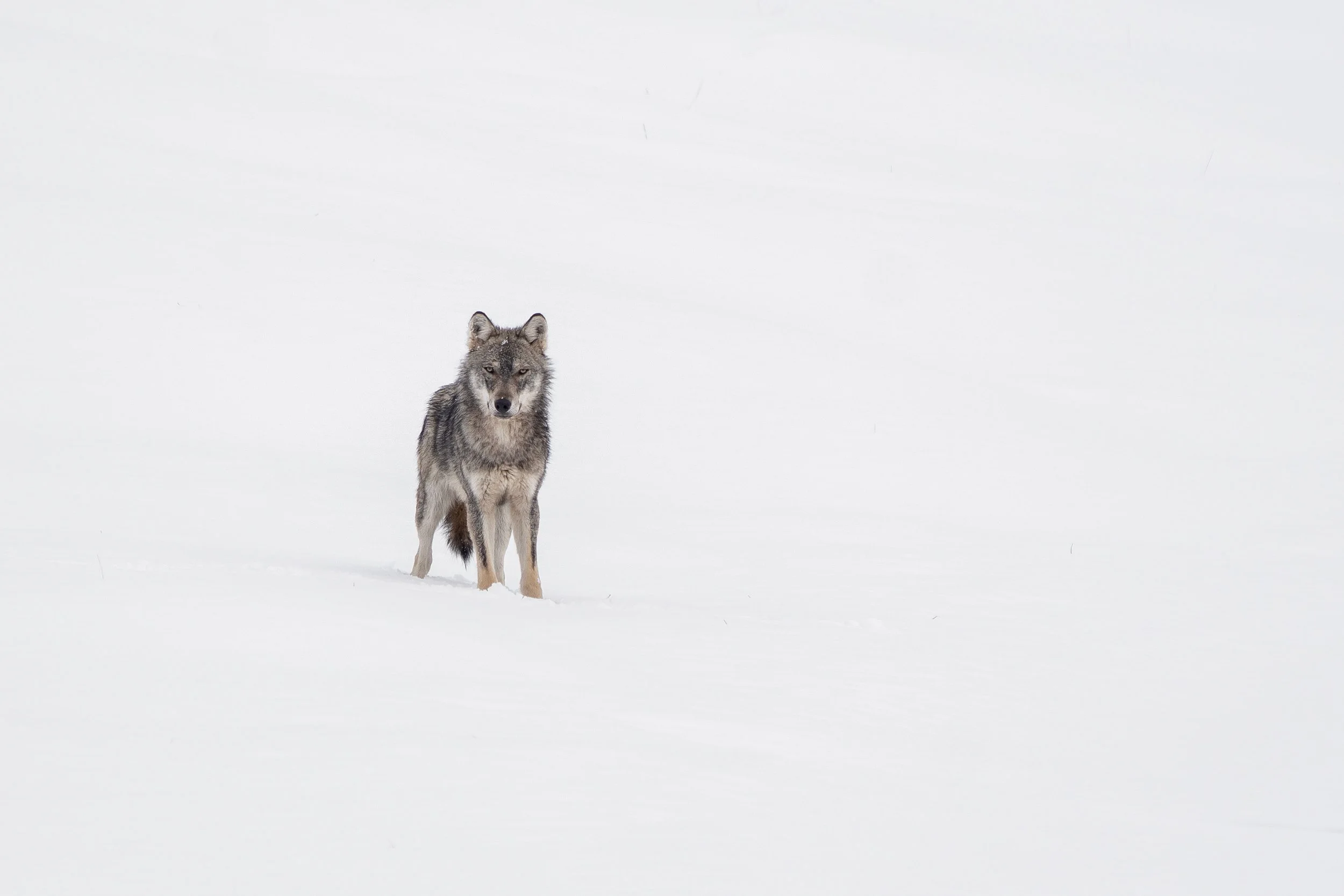
The meeting took place in the snow.
“We saw each other at the same moment,” he recalls. For several minutes neither moved. Then came eye contact. What followed lasted only seconds, yet remains vivid years later.
“The wolf is often misunderstood. People fear it, debate it, project onto it. But what I experienced that day was an animal that was wary, yes, deeply so, but also curious, and above all mythical in a way I had never expected to feel so physically.”
Listening to him describe the moment, it becomes obvious that the photograph itself is almost irrelevant.
He did make an image, yet when he reflects on the encounter today, it is not the image he remembers most strongly.
“I did photograph it. But if I’m honest, the image matters far less to me than the moment itself.”
It is difficult to think of a statement that better encapsulates the difference between wildlife photography as a hobby and wildlife observation as a way of seeing the world. Many photographers spend years chasing images. Jacques speaks instead about chasing experiences.
The wolf, he says, reminded him that the true reward lies elsewhere.
“The real reward is not the photograph. It’s being present, being still, and being trusted, even briefly, by something truly wild.”
That idea surfaces repeatedly throughout our conversation. Again and again, Jacques returns to the importance of slowing down. Not simply moving slowly through a landscape, but learning to operate on an entirely different timescale. Patience is a word that appears frequently in wildlife photography circles, yet Jacques uses it differently from most people. For him, patience is not about enduring long periods of inactivity while waiting for something to happen. It is about changing one’s relationship with time itself.
“It means taking the time to walk slowly, to stop often, to notice,” he explains. “It means being willing to turn back without a photograph because you sensed the moment wasn’t right, because an animal was feeding undisturbed, because the cost of pressing on was too high.”
What struck me most was the absence of frustration in his description. There is no sense of missed opportunities, only an acceptance that wildlife operates according to its own rules.
“When you stop putting pressure on yourself to get the shot, something shifts. You begin to blend into the landscape rather than move through it. You start to live at nature’s pace rather than your own.”
Animals, after all, have no concept of our schedules. They do not emerge because we have driven three hours to reach a location. They do not pose because the light is perfect. They appear when conditions suit them. The challenge is not persuading wildlife to conform to our expectations. The challenge is learning to leave our expectations behind.
As the conversation progressed, it became increasingly clear that Jacques views wildlife photography through the lens of natural history rather than image-making. When discussing fieldcraft, for example, he spent remarkably little time talking about cameras. Instead, he talked about tracks, droppings, browse marks, animal trails, feeding signs, alarm calls.
The countless clues left behind by wildlife that most people walk past without noticing.
“The signs are always there,” he says. “The question is simply whether you know what to look for, and where to look.”
One of the most valuable lessons he learned emerged from this way of thinking. Like many wildlife photographers, he spent years searching directly for animals. Eventually, he realised he was asking the wrong question.
“The lesson that changed everything wasn’t about approach or camera technique,” he says. “It was this: stop looking for the animal. Look for its food.”
The simplicity of the idea is deceptive. Find what an animal eats, understand when that food is available, identify where it is concentrated. The animal will often follow.
“Once you’ve found the fridge,” he laughs, “everything becomes much simpler.”
Behind the humour lies a profound ecological truth. Wildlife is rarely random. Animals move through landscapes according to energy, opportunity, safety and necessity. Understanding those relationships transforms the way a person sees the world.
The conversation inevitably turned towards ethics, a subject that has become increasingly important as wildlife photography continues to grow in popularity. I expected a clear answer. Instead, Jacques offered a thoughtful challenge.
“Honestly, I’m not sure truly ethical wildlife photography exists in an absolute sense.”
It is not the sort of statement often heard within wildlife photography circles, yet his reasoning is difficult to dismiss.
“If we wanted to be one hundred per cent ethical, we’d stay on the paths and never enter the forest at all. Our presence always has some impact, however small.”
What matters, he believes, is understanding that impact. Knowledge becomes the foundation upon which ethical decisions are built.
“There is a fundamental difference between making a poor choice deliberately and making one out of ignorance.”
It is one of the reasons he now places so much emphasis on education and workshops. Not photography workshops in the traditional sense, but opportunities to teach people how to understand what they are looking at and recognise the consequences of their actions.
When pressed for a practical definition of ethical wildlife photography, however, he eventually arrives at something beautifully straightforward.
“You have photographed ethically when you have not changed the natural behaviour of the animal, neither before the photograph, nor after it.”
It is difficult to improve upon that.
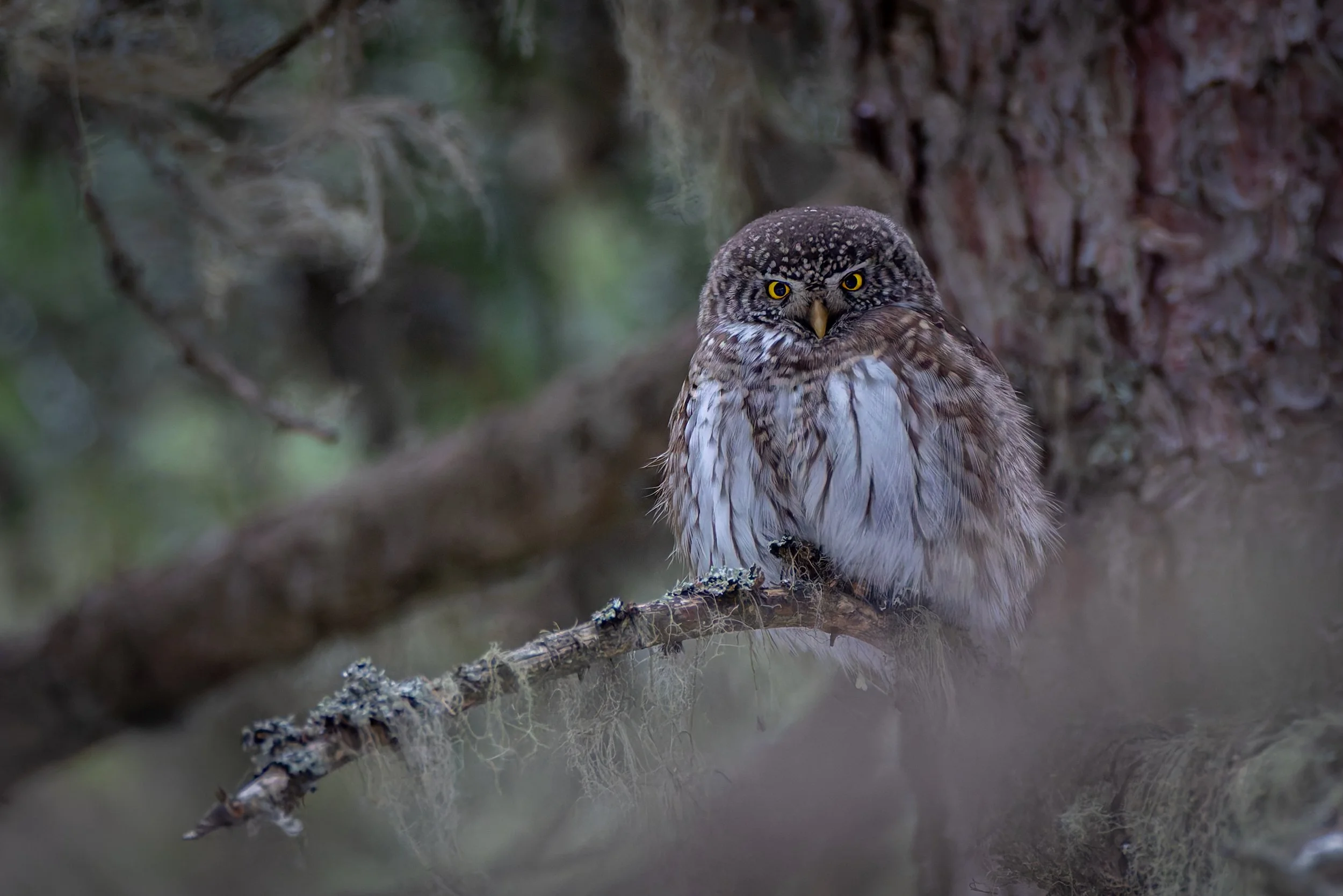
Perhaps the most surprising part of our conversation came when discussing a piece of advice that many wildlife photographers would consider fundamental: returning repeatedly to the same location. Conventional wisdom suggests that familiarity leads to success. Learn a place intimately and opportunities increase. Jacques agrees, but only up to a point. Over time, he has become increasingly concerned about the subtle effects repeated human presence can have on wildlife.
“We often think we’re invisible,” he says. “But the animal has smelled us. It knows we were there yesterday, and the day before.”
Gradually, some animals begin to tolerate our presence. Many photographers would celebrate this. Jacques does not.
“When a wild animal starts to accept human presence as normal, its behaviour changes. It becomes less wary, less itself.”
As a result, he deliberately rotates locations, allowing areas time to recover from his presence. His reasoning is summed up in a question that has stayed with me ever since.
“The question I always ask myself is not ‘what do I gain from going back?’ but ‘what does the animal lose if I do?’”
Few wildlife photographers frame the issue in those terms. Perhaps more should.
Towards the end of our conversation, we touched upon social media, another subject that often provokes strong opinions. Jacques acknowledges its strengths. It allows people with shared interests to connect, learn from one another and build communities that would have been impossible a generation ago. Yet he also sees dangers. Increasingly, he believes photographers compare themselves against carefully curated versions of other people’s lives. Curiosity gives way to competition. Observation gives way to performance.
“People start chasing likes rather than understanding,” he says.
The pressure to create increasingly dramatic images can lead photographers towards questionable decisions, particularly when viewers rarely see the context behind a photograph. They see the image, they do not see the disturbance. They do not see the animal’s response, they do not see what happened afterwards. His advice remains consistent with everything else he has said. Spend less time online…..spend more time outside. The answers are not on the screen. They are waiting in the landscape.
As our conversation drew to a close, Jacques reflected on what he sees as one of the greatest conservation challenges facing modern society. It is not a lack of technology, nor is it a lack of information.
It is a loss of connection, and more specifically, a loss of practical understanding.
“What we’ve lost, gradually and almost without noticing, is something our ancestors carried as common knowledge,” he says.
How to recognise an animal trail.
Today, almost everyone carries a smartphone. Very few can identify an animal path through long grass. That observation lingers long after the interview ends because it feels undeniably true. Perhaps that is why Jacques’ philosophy resonates so strongly.
At its heart, it is not really about photography at all, it is about attention, about slowing down enough to notice, about replacing certainty with curiosity, about understanding before documenting. In an age obsessed with speed, visibility and instant results, those ideas feel both refreshing and quietly radical.
……..and perhaps that is the greatest lesson of all. Before reaching for the camera, learn to listen, the photographs, if they come, will be better for it.