

Fieldcraft Friday: Listening to What the Woods Tell You
Introduction: The Quiet Skill Most Photographers Miss
Good fieldcraft isn’t just about seeing, it’s also about hearing. Most wildlife photographers are visual by habit. We scan for shapes, patterns, and movement. But the best field naturalists listen first. Their ears, not their eyes, tell them when to lift the camera.
Before a deer steps into a clearing or a wren flicks through a hedge, the woods have already whispered what’s coming. The rustle of a blackbird’s alarm, the brittle snap of a twig in still air, the subtle change in the tone of the wind through the canopy, each sound is a clue.
Why Listening Matters in Fieldcraft
Sound carries more than sight ever can. A fox may be invisible in bramble, a badger hidden under fern, but both betray their presence through sound long before they’re seen.
Listening builds situational awareness (it tells you what’s happening beyond your line of sight). The forest is a network of signals:
Alarm calls ripple like radio broadcasts between birds and mammals.
Movement sounds reveal the size, weight, and intent of an animal.
Environmental sounds: wind, rain, river, tell you how your own noise will carry, and can help mask your movements.
In essence, listening makes you part of the environment instead of an intruder in it.
Tuning In: The Three Layers of Sound
When I settle into a location, I divide what I hear into three layers. It’s a habit born of years of dawn sits and quiet evenings in hides.
The Background (Ambient Layer)
This is the constant hum of the habitat: wind through leaves, distant road noise, the soft ticking of rain on bramble. It defines the acoustic character of the place. Learning it helps you notice what doesn’t belong: the sudden hush before an alarm, the faint crunch that breaks the pattern.
The Midfield (Wildlife Layer)
This is where most animal communication lives: the rustle of a vole, the wingbeat of a pigeon, the high buzz of a wren’s scolding call. These are clues to presence and mood. For example, the metallic tink-tink of a robin often marks territorial tension, while blackbirds give a sharp, anxious “chink” when a predator moves through.
The Foreground (Your Own Noise)
Footsteps, clothing, tripod clips, Velcro. Understanding this layer is self-awareness in sound. Listen for how your movement alters the soundscape. Can you hear your coat brushing ferns over the robin’s call? If so, so can everything else.

Getting to know the alarm calls of birds (like this Jay) can help to give early warning of a prowling fox, or roosting owl.
Reading the Woodland Chorus
Sound is dynamic, and birds are the best narrators of what’s happening. If you can read their reactions, you’ll know who’s moving long before you see them.
Songbirds create a baseline of calm. When it falls silent, ask why?
Wrens and robins often follow predators, scolding from safe cover.
Blackbirds and thrushes give loud, directional alarms — follow their gaze.
Jays and magpies betray foxes, cats, and owls with persistent harsh calls.
A sudden “tick tick” from a blackcap or “churr” from a whitethroat can mark a nearby human or raptor.
If you map these sounds mentally as you move, you can track the ripple of disturbance across the woods like a radar sweep.
Practical Listening Exercises
The One-Minute Silence Test
Sit still, close your eyes, and list five distinct sounds you can hear. Repeat after five minutes. What has changed? What has stopped? The difference is data.
Sound Mapping
Use your notebook or phone to sketch a simple map of where each sound comes from — bird to the left, rustle behind, river ahead. Over time, you’ll learn how far different calls travel and how to triangulate movement.
Dawn or Dusk Soundscapes
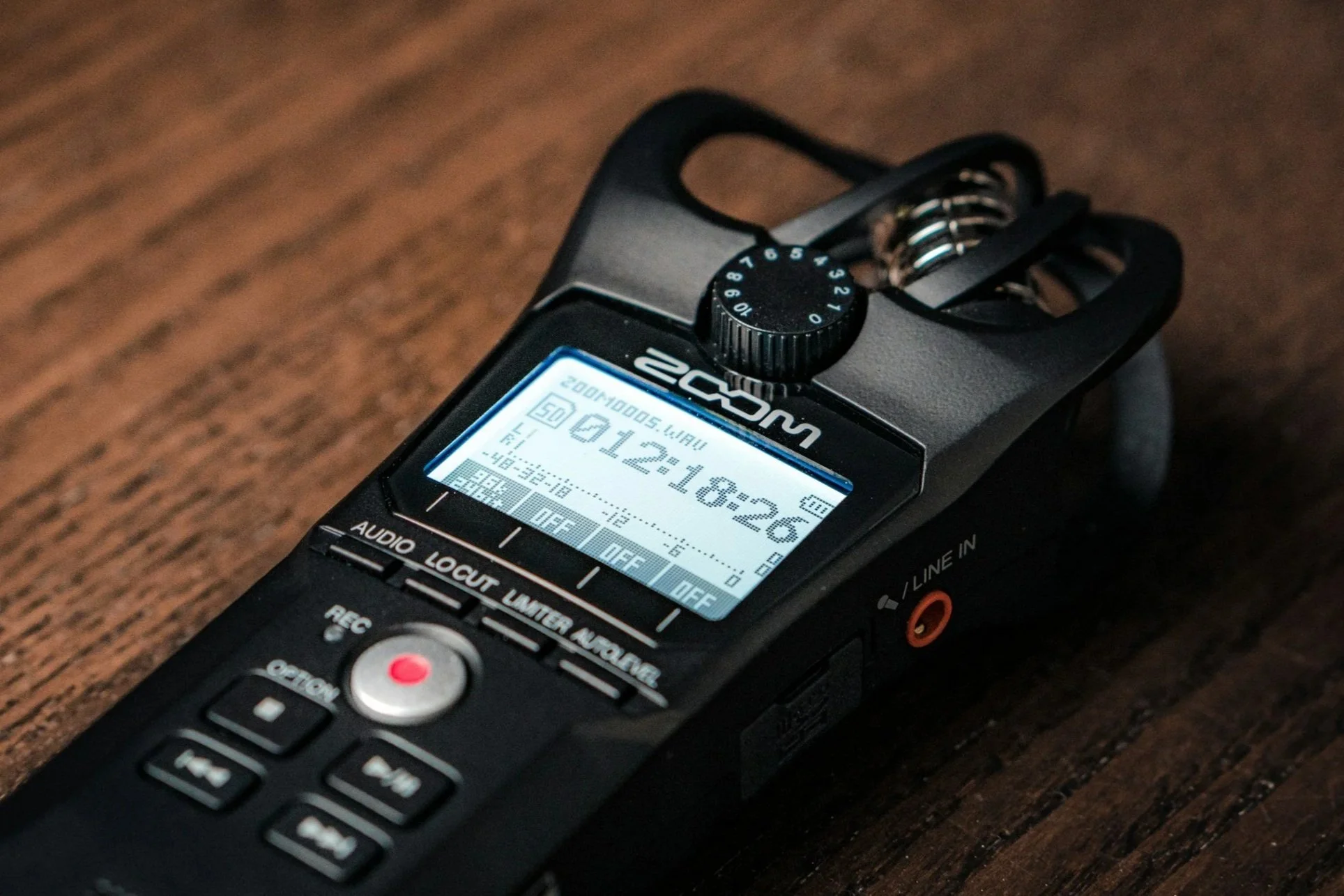
Record a minute of sound each week with a handheld recorder or phone. Listen back at home with headphones — you’ll notice detail you missed in real time, and your ear will grow sharper.
Ethics and Awareness
Listening also prevents disturbance. Many photographers approach too closely simply because they rely on sight and miss early warning sounds — the huff of a deer, the quick bark of a fox, the change in the tone of the birds. When you train your ear, you’ll learn to pause instead of pursue.
If the woodland falls silent as you move, that’s feedback. You’re being noticed. Step back, wait, and let the normal rhythm resume before continuing. Ethical fieldcraft begins with sensitivity to silence.

The incessant calling by a red deer hind alerted me to the fact that there was a calf hidden in the grass nearby. This allowed me to locate it using my binoculars, crawl into a position that wasn’t going to stress the calf, and get the shot before retiring back out by the same route.
When the Woods Speak Back
Some of my best encounters began not with a sighting, but a sound…………
The clatter of a jay’s wings warning of a passing goshawk.
The plop of a water vole as it heads downstream
The bark of a roe deer in bracken.
Moments like these remind you that sound connects everything. The forest is never truly silent; it’s just waiting for you to start listening properly.
Conclusion: Hearing the Hidden World
If you only use your eyes, you’ll always be half-blind in the field. To really know a place, you must listen until its patterns become second nature, until you can tell a squirrel from a blackbird by the weight of the rustle, or know that a tawny owl is close because the robins stopped singing. This is a skill that takes years to learn and I am just at the start of my journey.
But what I have learnt is that listening is the most underrated of all fieldcraft skills, and it’s the one that turns ordinary walks into conversations with the wild.
So next time you head out, leave the camera in the bag a little longer. Let the woods tell you what’s happening before you even see it.
———————————————————
Frequently Asked Questions: Listening as Fieldcraft
Why is listening more important than just looking in wildlife photography?
Many animals reveal themselves through sound long before they’re seen. Listening helps you detect subtle cues — rustling leaves, wingbeats, alarm calls, or the sudden hush of silence. It builds awareness of hidden movement and teaches you to predict behaviour before it happens. For field photographers, your ears can be the best early-warning system in the woods.
What equipment do I need to record wildlife sound while doing fieldcraft?
You don’t need a professional setup to start recording. A simple kit might include:
• A handheld recorder (Zoom H1n or Tascam DR-05X)
• A windshield (“dead cat”) to reduce noise
• Clip mics or shotgun mics for directional capture
• Headphones for live monitoring
As your skill improves, you can add external mics, stereo rigs, or parabolic dishes for pinpoint recordings.
How can I train my ears to distinguish alarm calls from background noise?
Start small. Sit quietly and identify at least five distinct sounds in your surroundings. Listen for changes in rhythm or tone — silence is often as revealing as noise. Learning the key alarm calls of robins, wrens, and blackbirds will quickly sharpen your ear. Over time, you’ll build a mental sound map that tells you where and why animals are reacting — an essential fieldcraft skill.
Can I use recordings to identify animals later, if I miss seeing them in the field?
Yes. Wildlife sound is an excellent record of presence. Many naturalists use audio logs to confirm species such as owls, bats, or crickets. You can upload or compare your clips on community databases like Xeno-canto or iNaturalist, or use apps such as Merlin Bird ID for identification. Always include the date, time, and general location (never exact nest sites).
Is it ethical to move quietly closer to animals using sound cues?
Ethical listening means using what you hear to avoid disturbance, not to close in. If you notice alarm calls or prolonged silence, stop or step back — it’s a sign you’ve been detected. Listening is about blending in with the landscape and respecting natural behaviour. You’ll get far better photographs by letting wildlife return to calm curiosity rather than fleeing fear.
How far can bird alarm calls travel in woodland?
Distance varies by species and environment. A blackbird’s alarm can travel up to 150 metres in open woodland, while smaller species like wrens carry less than 50 metres through dense cover. Weather, wind, and humidity all influence range. Learn these acoustic distances and you’ll know whether a warning relates to your position — or something deeper in the trees.
What are the easiest British bird calls to learn for wildlife tracking?
Begin with these “sentinel” species:
• Robin: sharp tikk-tikk-tikk — often first to spot ground predators.
• Blackbird: loud chink calls in bursts, especially near dusk.
• Wren: short, scolding trrr-trrr from cover.
• Jay: harsh screech announcing foxes, owls, or people.
Learn these and you’ll understand much of the woodland’s warning network.
Can I use sound to find mammals like deer or badgers?
Definitely. Mammals make distinctive noises when feeding or moving:
• Deer: twig snaps, hoof thuds, soft grunts.
• Badgers: rustling bracken, snuffling, gentle digging.
• Foxes: short barks or high yelps at dusk.
Use wind direction to triangulate position and pair what you hear with field signs like tracks or dung. It’s one of the most natural and low-impact detection methods there is.
What time of day is best for recording natural soundscapes?
The dawn chorus: 30 minutes before sunrise, gives the richest diversity of calls.
At dusk, you’ll capture owls, foxes, and roosting bird chatter. Still autumn mornings or calm winter nights also produce clean recordings with minimal background interference. Avoid strong wind and heavy rain, which distort delicate frequencies.
How can I share or use my wildlife recordings responsibly?
Use your recordings for education, interpretation, or conservation. If sharing online, avoid tagging specific nesting or den sites. Never play calls back in the field to lure animals closer…..this disrupts natural behaviour.
Instead, focus on storytelling: help others appreciate what a healthy soundscape means for biodiversity.