Best Camera Backpack for Wildlife Photography with a Long Lens: Tested with a Canon RF 200–800mm
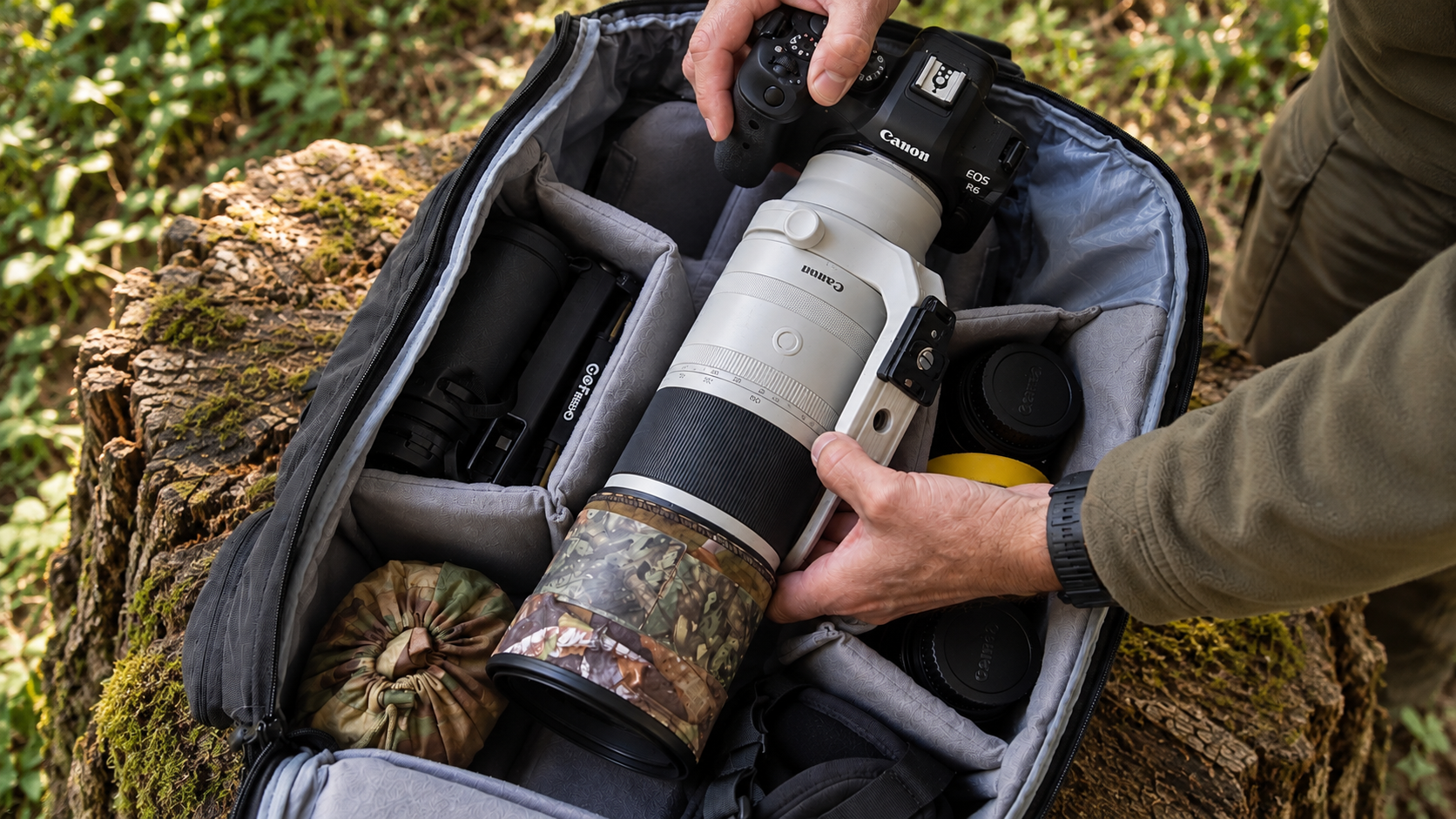
Finding a camera backpack for the Canon RF 200–800, or any similarly long wildlife lens, becomes much harder once you want to carry the lens attached to the camera.
My normal setup is a Canon EOS R6 with the RF 200–800mm fitted, lens hood reversed and shoulder strap attached. I want that complete setup to go into the backpack without dismantling it, while still leaving room for the equipment I actually use in the field.
That is the test at the centre of this comparison.
I own three backpacks that approach the problem very differently:
F-Stop Tilopa
An original Lowepro Flipside 400 AW
K&F Concept Nature Wander 08 30L
The Tilopa has been my main photography backpack for around three years. It carries a substantial load extremely well, but for many ordinary wildlife outings it is more backpack than I need.
The Lowepro I have owned (and used) for 6 years and is much more compact, but my R6 and RF 200–800 push it beyond what I consider a practical full wildlife load.
I bought the K&F Nature Wander 08 specifically to see whether it could carry everything I normally need while remaining noticeably less cumbersome than the Tilopa.
It can.
Affiliate disclosure: Some links in this guide are Amazon affiliate links. If you buy through one of them I may receive a small commission at no additional cost to you. This does not affect which equipment I recommend.
The Short Answer
For my Canon R6 and RF 200–800mm setup, the K&F Concept Nature Wander 08 30L is the best everyday wildlife photography backpack of these three. It comfortably carries my complete standard load, including the Canon R6 with RF 200–800mm attached, both smaller lenses, batteries, charger, power bank, head torch, SD cards, tripod plate and lightweight waterproof. It will also carry either my binoculars or thermal monocular, while leaving the separate laptop sleeve free.
The F-Stop Tilopa remains my choice when I need maximum capacity. It carries the full standard load, binoculars / thermal monocular and either my drone or DJI Pocket 2, with some smaller pockets still available.
My old Lowepro Flipside 400 AW has been superseded by the 400 AW III and is the most compact of the 3 bags, but it fails my standard-load test. It takes the camera and long lens, both smaller lenses and battery charger, but adding the remaining field equipment requires compression or compromises the fit and protection of the camera system.
So the choice is fairly simple: K&F for most ordinary wildlife outings, Tilopa when I genuinely need the extra capacity, Lowepro when I am carrying a smaller overall camera load.
What Counts as a Pass?
For this comparison, a backpack does not pass simply because I can persuade the zip to close. It needs to carry my complete standard wildlife photography load without compressing the camera or lens, forcing equipment into awkward positions, reducing protection or making access impractical.
The camera and RF 200–800 must sit securely with the lens attached, hood reversed and shoulder strap fitted, while the rest of the equipment has sensible storage around it.
I use three simple classifications:
Fail: the complete standard load cannot be carried properly without compromise.
Pass: the complete standard load fits securely and practically.
Pass + reserve: the complete standard load fits properly and useful additional capacity remains.
The Three Backpacks at a Glance
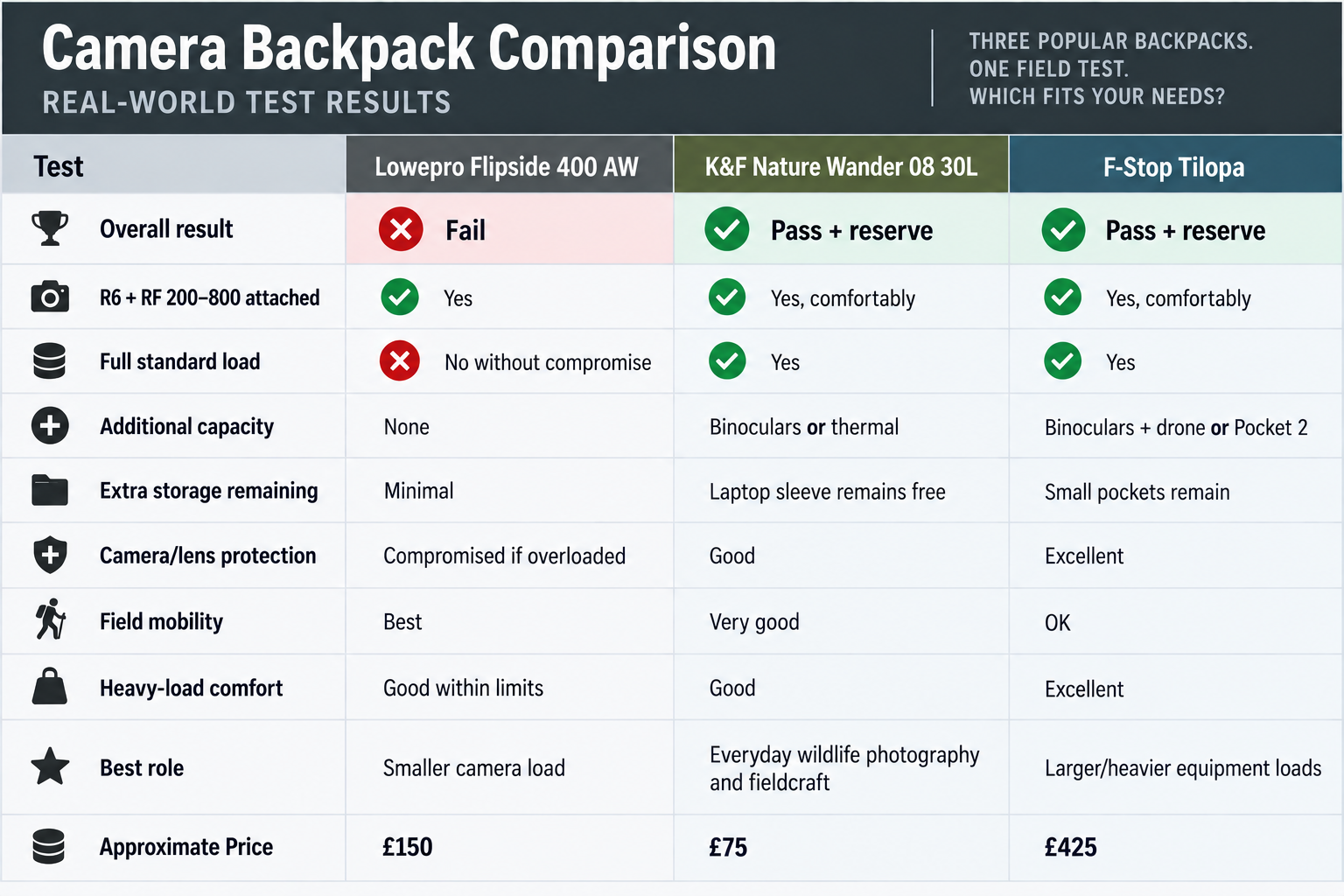
The important distinction is not simply how many litres each backpack claims to hold.
The K&F carries enough for most of my wildlife outings without burdening me with unnecessary bulk. The Tilopa carries considerably more, but I only benefit from that extra space when I genuinely need it.
My Standard Wildlife Photography Load
Rather than comparing backpacks using manufacturer capacity figures, I test them with the equipment I actually take outside.
Every backpack needs to be able to carry:
Canon EOS R6
Canon RF 200–800mm attached
Lens hood reversed
Shoulder strap fitted
Canon EF-S 10–18mm
Canon EF-S 55–250mm
Everbeam H6 Pro head torch
Charger for the R6 batteries
Two spare Canon batteries in a pouch
Spare SD cards in a hard case
Tripod mounting plate
Lightweight pack-away rain jacket
Cuktech 45W 20,000mAh power bank
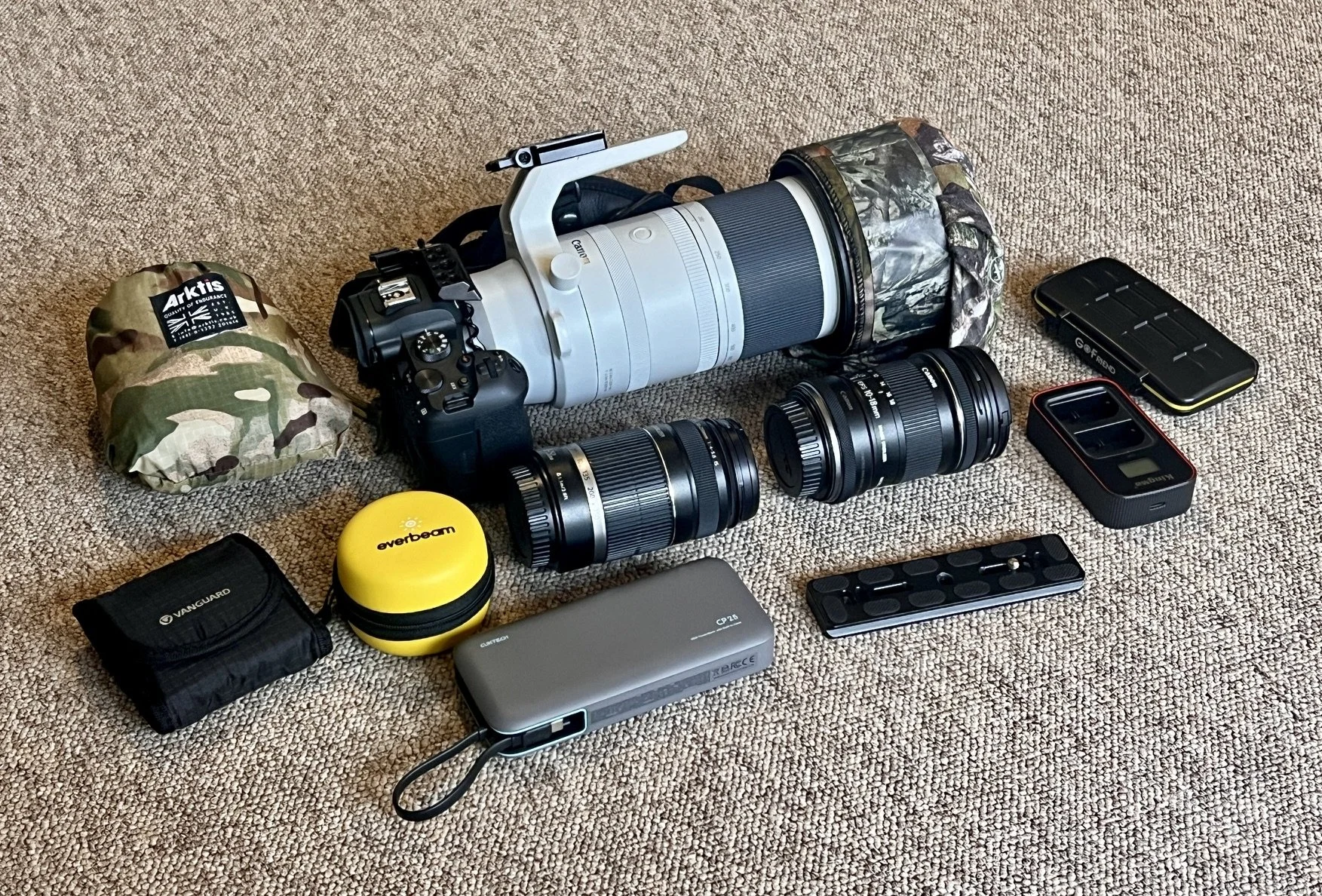
The standard wildlife photography load every backpack in this comparison has to carry without compromising protection or access.
Binoculars and my thermal monocular are bonus-capacity tests rather than minimum requirements. My drone and DJI Pocket 2 sit above that again. If a backpack can carry one of those as well, I regard that as meaningful reserve capacity rather than something it needs to pass.
The RF 200–800 is the non-negotiable part. I do not want to remove the lens every time I store the camera. Wildlife opportunities can be brief, so I want the camera ready to use as quickly as possible.
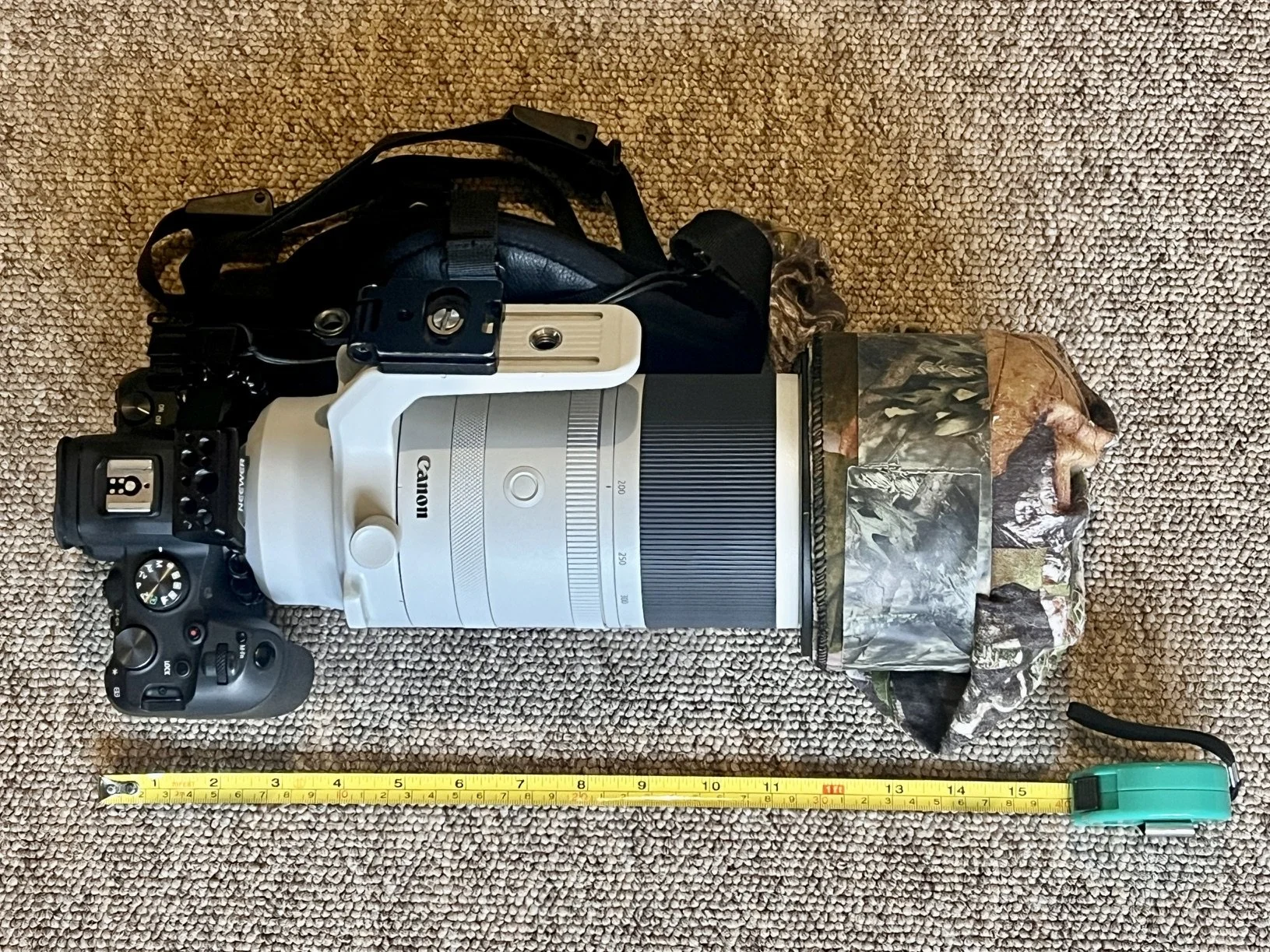
My Canon R6 and RF 200–800mm in the exact configuration I carry it, with the hood reversed and shoulder strap fitted. Total length is 40cm.
Why Long Wildlife Lenses are Difficult to Pack
A large wildlife telephoto creates a different problem from ordinary camera equipment. It needs a long, uninterrupted section of the backpack. Add the camera body, tripod foot and shoulder strap and the internal shape becomes more important than the advertised capacity in litres.
A backpack can therefore be large on paper and still work badly with a long lens.
The camera body may be pressed against the side, the tripod foot may create a pressure point, or the lens may consume so much usable space that batteries, clothing and other field equipment have nowhere sensible to go. That is why I am judging these bags by usable space, protection and access rather than capacity figures alone.
F-Stop Tilopa: Best When Capacity Matters
I have used the F-Stop Tilopa as my main photography backpack for around three years. Mine uses F-Stop’s modular internal camera unit system, which gives me considerable freedom to arrange the interior around the equipment.
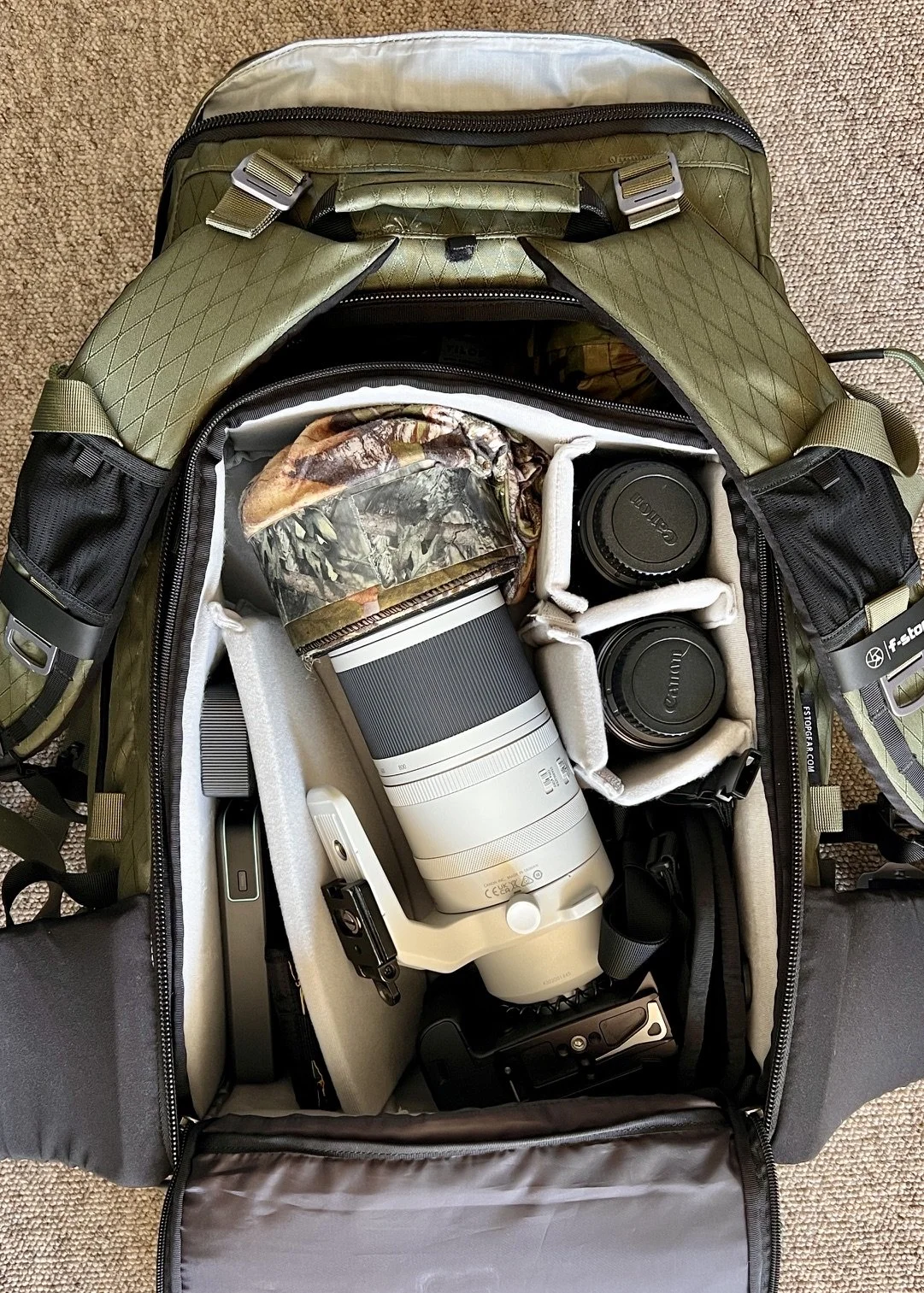
The Tilopa comfortably accommodates my R6 and RF 200–800mm in the main compartment with substantial usable space remaining in the top section and front and side pockets for additional equipment.
The R6 and RF 200–800 fit easily, as does the full standard load. I can then add my binoculars (or thermal monocular) and either my drone or DJI Pocket 2, though not both, while still retaining some smaller pockets for snacks or additional equipment.
Its harness is substantial and particularly good at supporting a heavier load. That makes the Tilopa the strongest choice of these three when carrying capacity and load support matter most. Its disadvantage is the inevitable consequence of that capacity.
It is a large backpack.
For wildlife photography mixed with tracking or fieldcraft, I am often crouching, kneeling, ducking beneath vegetation or moving along narrow animal trails. If I am carrying only the standard load and perhaps binoculars or a thermal monocular, much of the Tilopa’s additional volume becomes unused bulk.
There are outings where that extra capacity is invaluable…….there are many others where it simply is not necessary.
Lowepro Flipside 400 AW: Compact, but too Limited for my Full Load
The Lowepro represents the opposite end of the comparison. It is noticeably smaller and easier to move around with than the Tilopa, being a full 15cm shorter.
My R6 and RF 200–800 fit inside with the lens attached, hood reversed and shoulder strap fitted. I can also carry both smaller lenses and the battery charger.
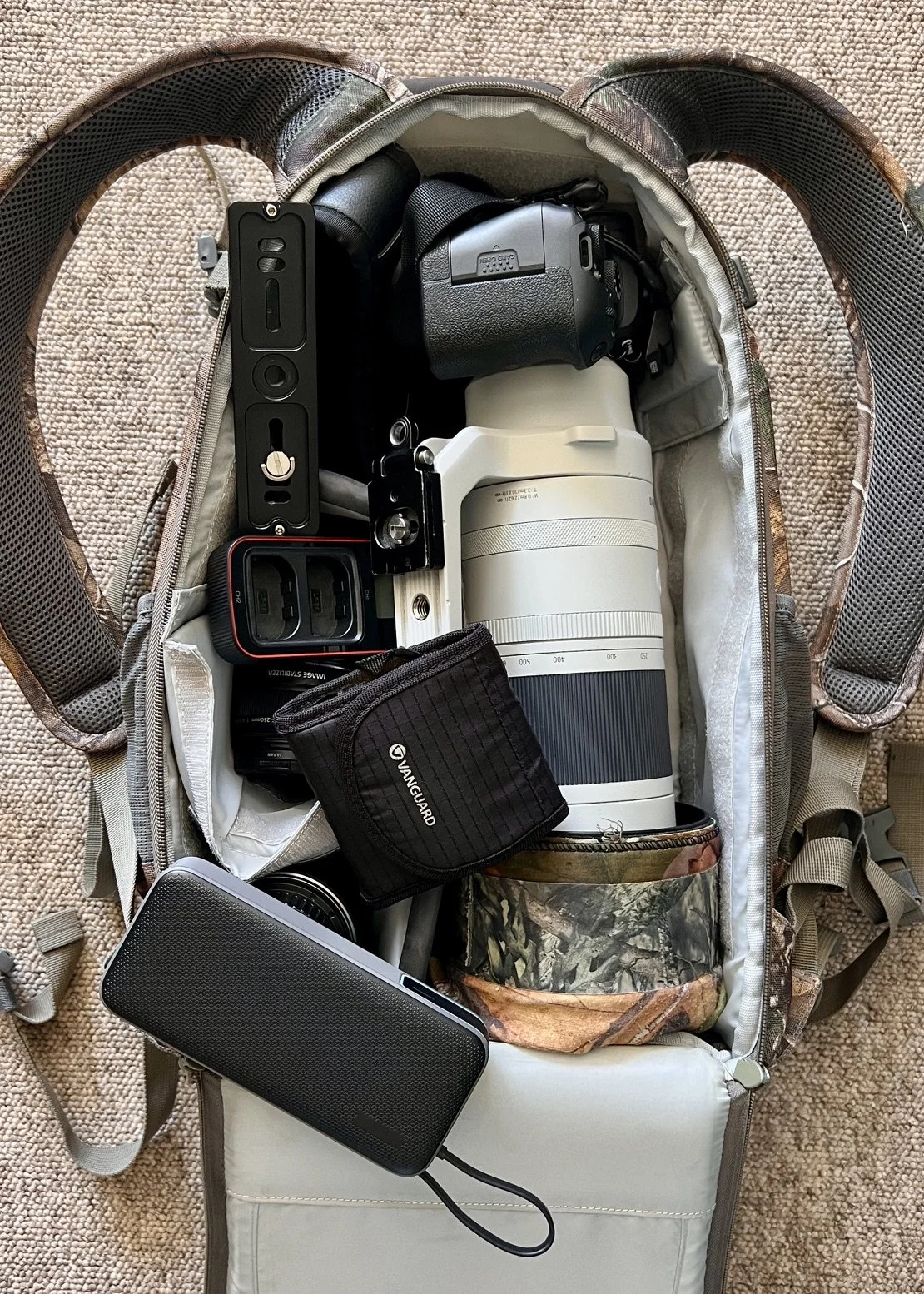
The Lowepro takes the core camera equipment, but there is not enough practical room for my complete standard wildlife load without compromising the fit.
The problem is what happens next.
The head torch, spare batteries, tripod plate, SD-card case, waterproof and power bank cannot all be added without compressing the load or compromising the fit and protection of the camera and long lens.
I could physically force more equipment inside. That is not the same thing as the backpack working properly. Once I need to compress expensive camera equipment or start filling gaps simply because something will fit there, the test has failed.
For that reason, the Lowepro fails my standard-load test.
That does not make it a poor backpack. It means my current equipment has outgrown what I reasonably want to ask it to carry. With a smaller telephoto or stripped-back camera load, its more compact dimensions become an advantage. With my normal RF 200–800 setup, they become the limiting factor.
K&F Concept Nature Wander 08 30L: The Best Everyday Fit
I bought the K&F to solve the gap between those two backpacks. It needed to carry the R6 and RF 200–800 securely, accommodate the complete standard load and feel noticeably less cumbersome than the Tilopa.
It succeeds on all three.
I paid £69.99 for mine including UK delivery via Amazon
That price makes the result particularly interesting, as the Tilopa is more than 5 x its price, but price only matters if the backpack actually performs the job properly.
In this case it does.
Does the Canon RF 200–800 Fit With the Camera Attached?
Yes.
If you are specifically looking for a backpack for the RF 200–800 with the camera attached, this is the test that matters most. The R6 and RF 200–800 fit comfortably with the lens hood reversed and shoulder strap still fitted. The camera and lens sit securely without needing to be forced against the surrounding padding, and the tripod foot does not create an awkward pressure point.
That distinction matters.
A long wildlife lens simply fitting inside a backpack is not enough. I need to be comfortable carrying several thousand pounds’ worth of camera equipment in it.
The K&F passes that test.
Can it Carry my Complete Wildlife Load?
Yes, comfortably.
The full standard load fits without compressing the camera system or forcing equipment into awkward positions.
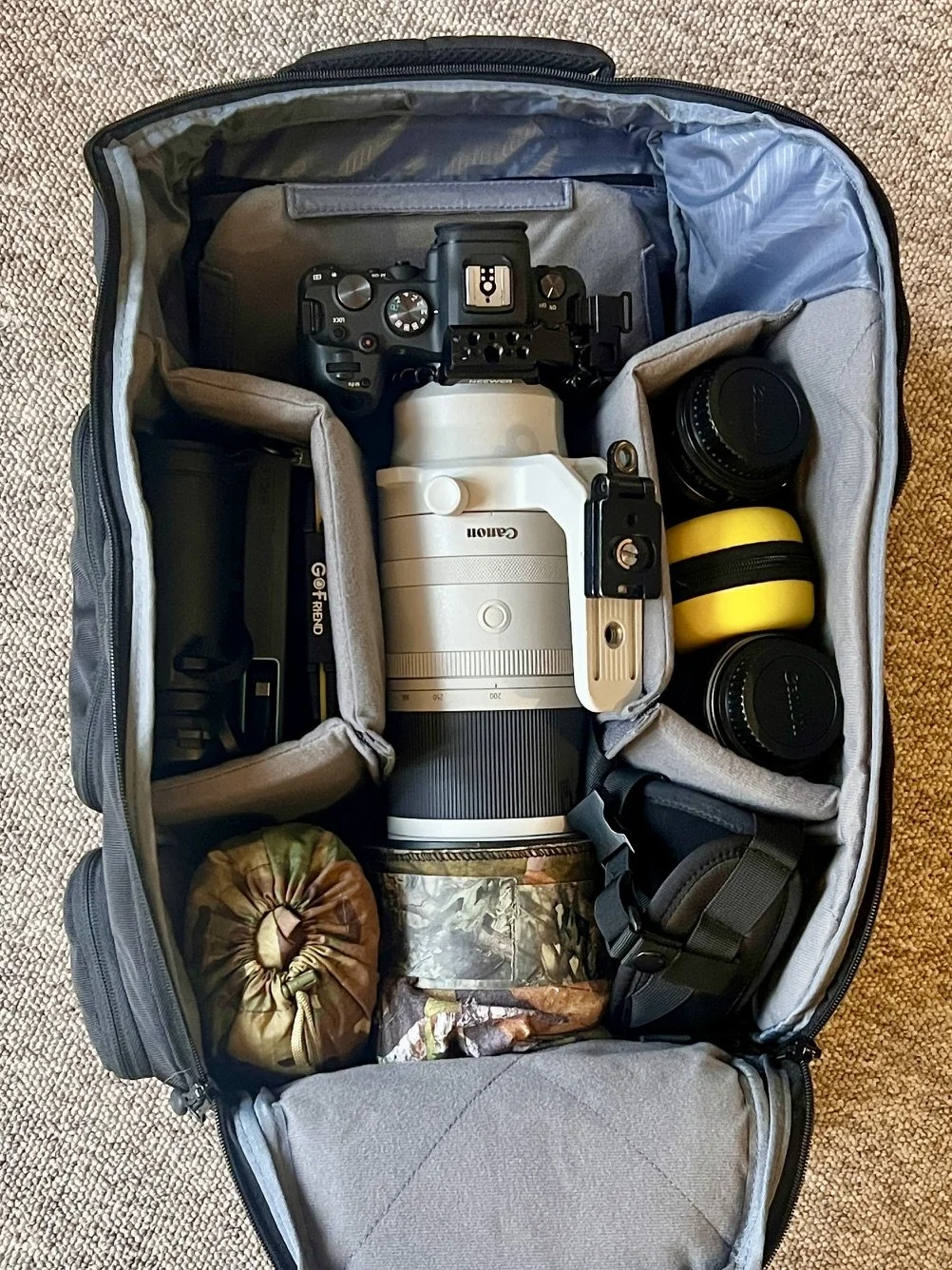
My complete standard wildlife photography load packed into the K&F Nature Wander 08 without compromising the R6 and RF 200–800mm.
There is enough useful reserve capacity to add either my binoculars or thermal monocular. That matters because these are not theoretical extras. Both are things I genuinely carry depending on what I am doing. The drone or DJI Pocket 2 are unlikely to fit sensibly on top of the full standard load. If I need either of those as well, the Tilopa becomes the more appropriate backpack.
That gives the K&F a very useful capacity threshold: enough for my normal work, but without becoming another oversized bag.
The Side Zip Keeps the Binoculars Accessible
I’m not a big fan of keeping my binoculars in a bag as they are one of those pieces of kit that are in constant use. However, with the K&F Concept 30L, they can be quickly accessed through the zip on the side of the camera bag (without the need to open the main camera section).
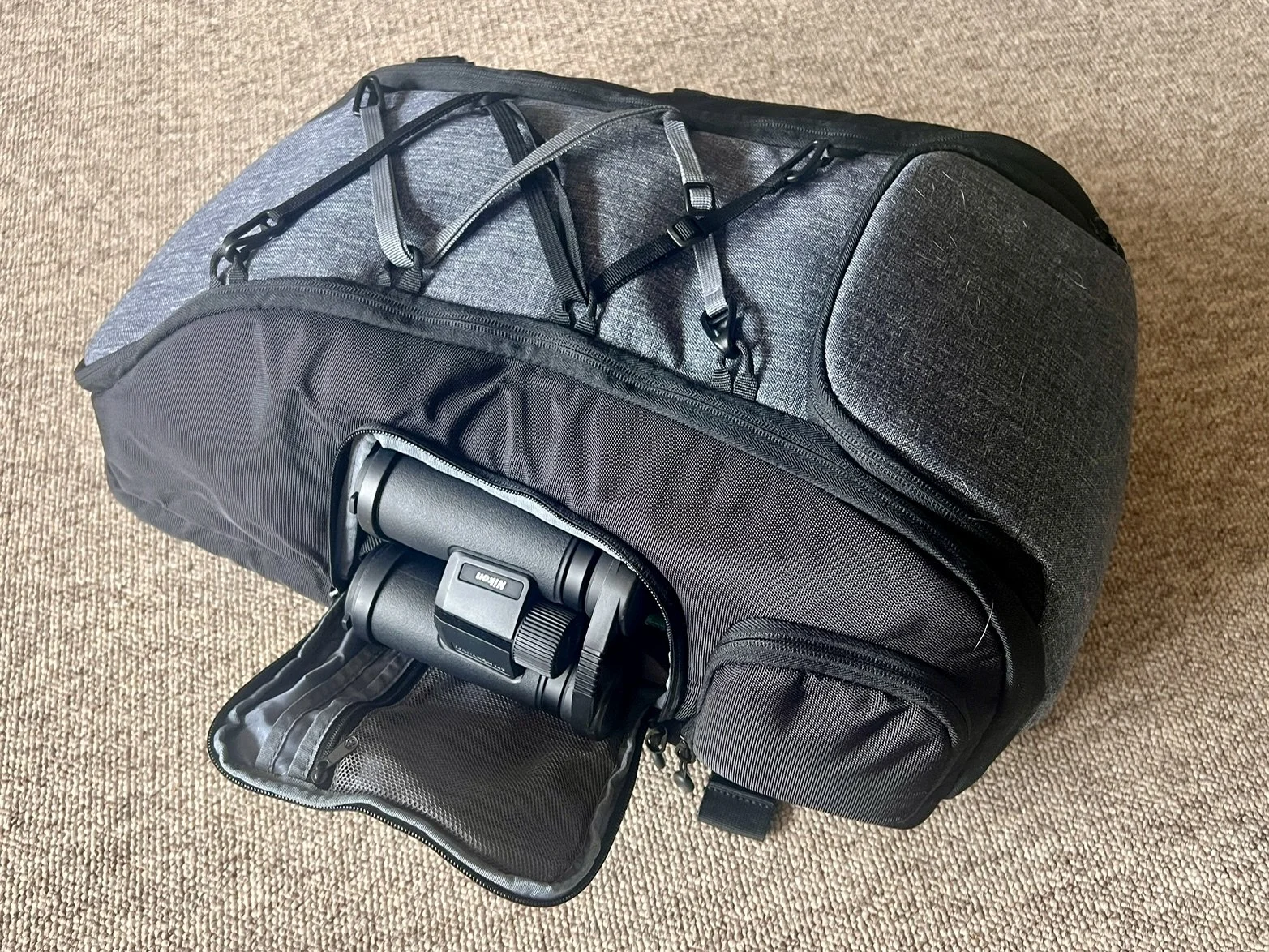
My binoculars fit in the K&F’s side compartment, so I can reach them without opening the main camera section.
That sounds like a small detail until you use the backpack in the field. If I am watching an animal or checking movement ahead, I can reach the binoculars without exposing or disturbing the camera equipment. It also avoids repeatedly opening the main compartment simply because I want to scan a woodland edge or look more closely at something in the distance.
For wildlife photography, that is considerably more useful than merely having enough space somewhere inside the bag.
For more information on how to choose the best binoculars for watching wildlife we have a dedicated guide.
The Separate Laptop Compartment is Genuinely Useful
The dedicated laptop sleeve remains completely unused by the camera load and will take a laptop up to 15.6 inches. I am unlikely to carry a laptop very often while photographing wildlife, but that does not make the compartment redundant. For me it is more likely to carry a notebook, field guide, maps or perhaps an iPad.
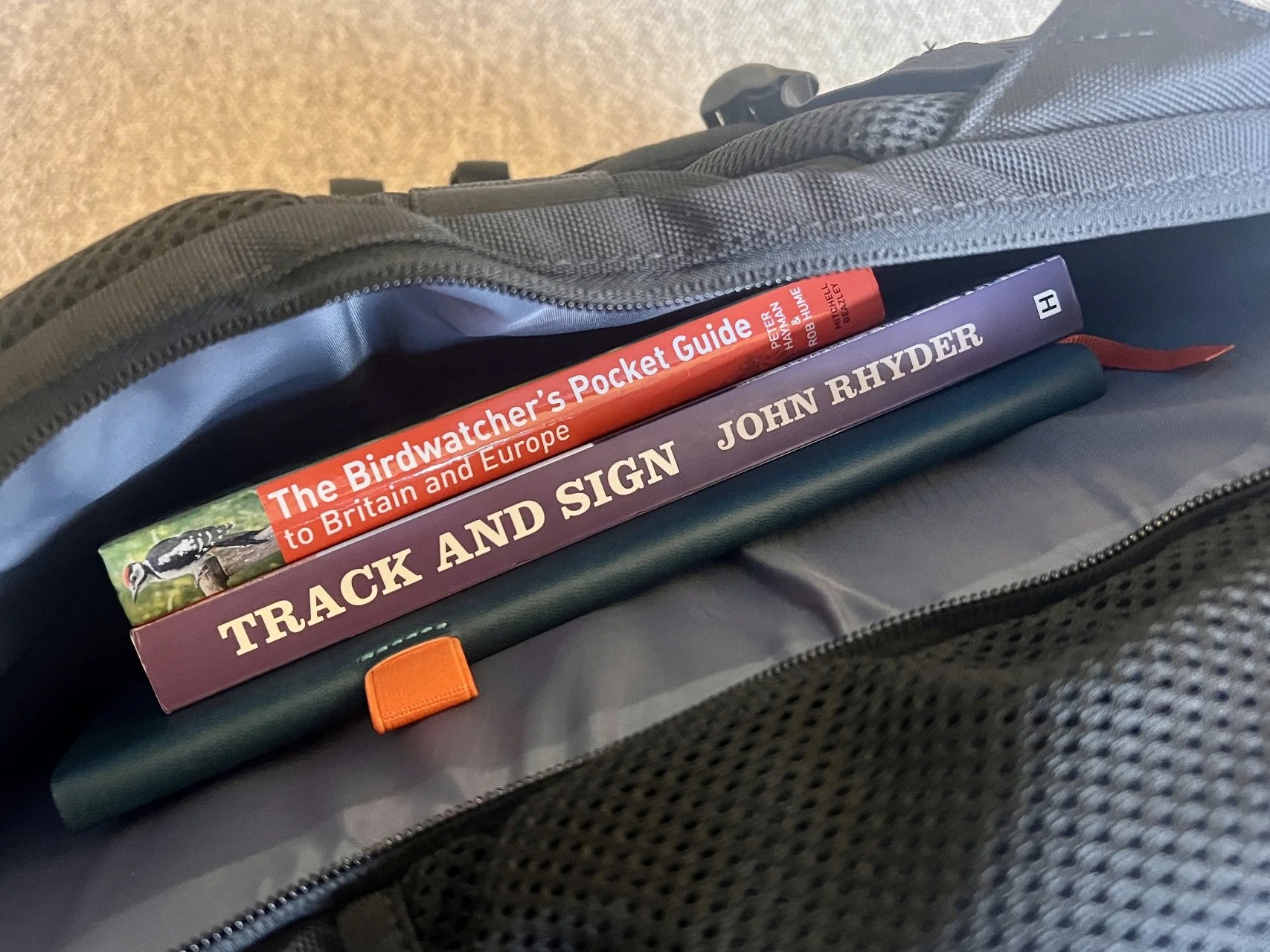
With the camera compartment fully loaded, I can still use the separate laptop sleeve for field guides, a notebook or an iPad.
This is a good example of why usable storage matters more than headline capacity. The camera equipment does not consume every compartment in the bag. I still have somewhere practical for the non-photographic things I routinely take into the field.
Camera Access and Equipment Security
The R6 and RF 200–800 can be removed together without moving other equipment first. That matters in wildlife photography, where an opportunity can disappear very quickly.
The camera is also straightforward to put back into the backpack rather than requiring the surrounding equipment to be rearranged each time. The lens is properly supported, the dividers hold the system securely and the tripod foot does not create a troublesome pressure point.
So the K&F passes both the protection and access parts of my test.
Comfort and Field Use
With my complete standard load, the K&F is comfortable enough for the sort of wildlife outings for which I bought it. The load remains stable while walking and the backpack does not feel excessively rear-heavy or prone to shifting.
The Tilopa still has the more substantial harness. If I were carrying a significantly heavier load or spending a long day with additional equipment, I would prefer it. But that is not the job the K&F needs to perform.
What matters more for ordinary wildlife photography is that the K&F is noticeably less cumbersome. That becomes particularly apparent when I am examining tracks, checking trail cameras, ducking beneath branches or working through vegetation. It carries what I need without making me feel as though I have brought an expedition pack for a morning in the woods.
Build Quality and Durability
Initial build quality is good.
The dividers, zippers, seams, buckles and strap attachment points feel sufficiently secure for the equipment I am carrying, and I am satisfied with the stability of the camera system inside the backpack.
There is an important limitation to that conclusion. I have used the Tilopa and Lowepro for many years…….I have not used the K&F for anything like that long.
I can therefore make reasonably confident conclusions about fit, protection, access, comfort and initial construction quality. I cannot yet tell you whether it will survive several years of regular field use. That judgement will take time, and I will update this guide if longer-term use changes my opinion.
When Would I Take the Tilopa Instead?
The crossover is now fairly clear. If I am carrying the standard wildlife load plus either binoculars or my thermal monocular, the K&F gives me everything I need in a smaller package.
The Tilopa becomes worthwhile when I need to go beyond that. For example, standard load + binoculars + drone. At that point the Tilopa’s greater volume stops being unused bulk and becomes genuinely useful carrying capacity.
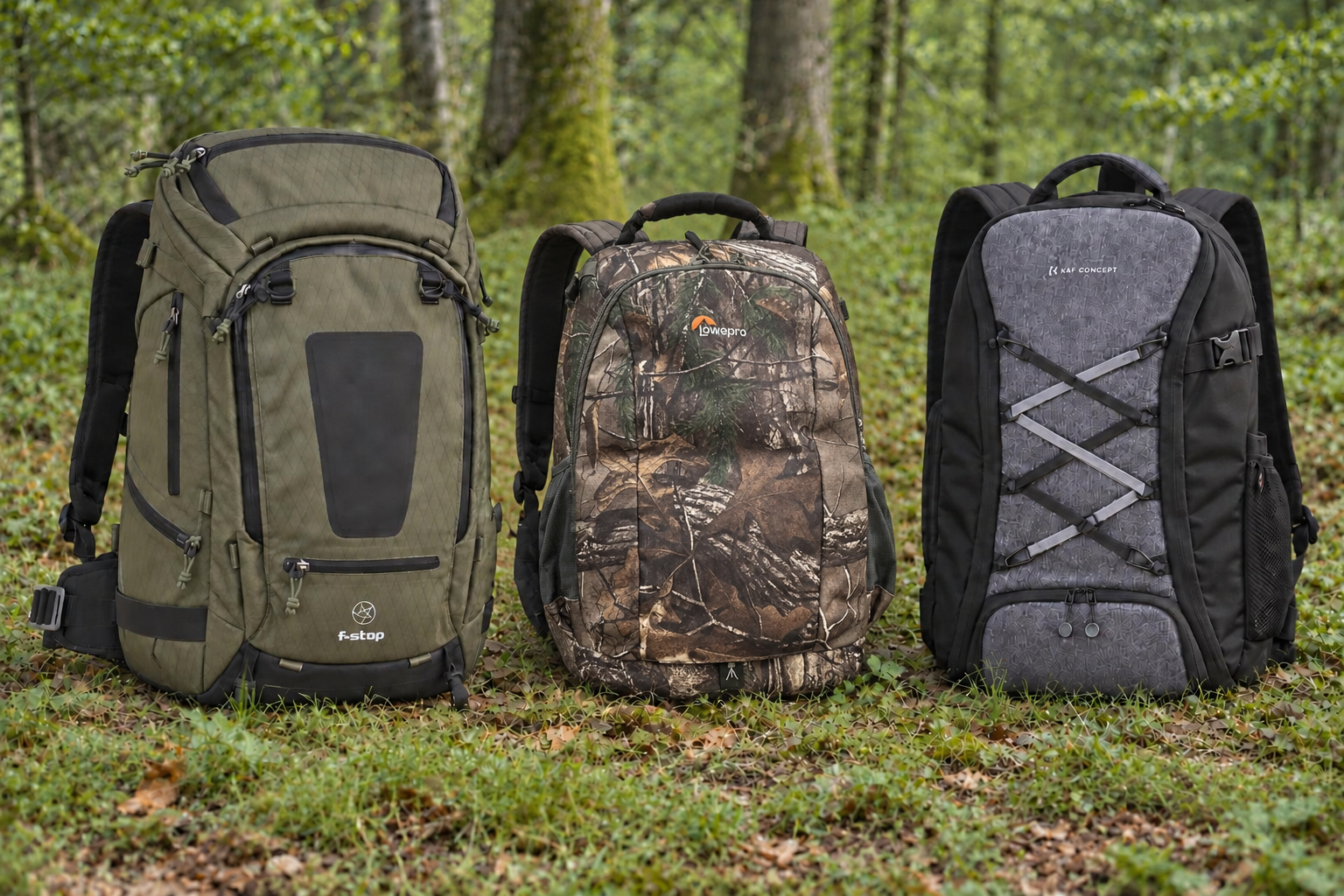
All three backpacks loaded for practical use. The Tilopa provides the most capacity, while the K&F gives me the better balance for ordinary wildlife outings.
That gives me a simple decision rule.
K&F for normal wildlife photography and fieldcraft. Tilopa when I need substantially more equipment.
What About Specialist Long-Lens Backpacks?
There are camera backpacks designed specifically around large telephoto lenses. They may make more sense if your overriding priority is maximum long-lens protection or carrying a heavy photography system for prolonged periods. That was not quite the problem I was trying to solve.
I already own a highly capable large backpack in the Tilopa. What I wanted was something smaller that could still carry the RF 200–800 attached and accommodate the equipment I actually use on an ordinary wildlife outing. The K&F fills that role.
I have not tested every specialist long-lens backpack, so I am not claiming it is objectively better than all of them. I can only judge these three bags against my own equipment and the way I actually work.
What About Sony 200–600, Nikon 180–600 and Sigma 150–600 Lenses?
Photographers using other large wildlife zooms face essentially the same packing problem. But a backpack that fits my Canon RF 200–800 setup will not automatically fit every other long lens. Camera-body dimensions, lens diameter, tripod-foot position and overall transport length all matter. Measure your complete camera-and-lens setup before assuming compatibility.
The fit conclusions in this guide apply specifically to my Canon EOS R6 and RF 200–800mm combination.
Which Backpack Should you Choose?
Choose the K&F Nature Wander 08 if…..
You want to carry a long wildlife lens attached to the camera, need enough room for genuine field equipment and want something less cumbersome than a large photography backpack. For my setup it carries the complete standard load plus either binoculars or a thermal monocular, while leaving the separate laptop compartment usable. That makes it my choice for most ordinary wildlife outings.
Check K&F Nature Wander 08 price
Choose the Lowepro Flipside 400 AW III if…..
Your overall equipment load is smaller and compactness matters most.
It takes my R6, RF 200–800, both smaller lenses and charger, but it does not carry my complete standard load without compromising the way the equipment is packed. With a shorter telephoto or a more minimal load, it becomes much more attractive.
Check Lowepro Flipside 400 AW III price
Choose the F-Stop Tilopa if…..
You need substantially more carrying capacity or better support for a heavier load. It takes my complete standard load, binoculars and either my drone or DJI Pocket 2, while retaining some additional small-pocket capacity. For equipment-heavy outings it’s a good choice but very cumbersome.
My Final Verdict
The K&F Concept Nature Wander 08 has filled the gap I wanted it to fill. My Canon R6 and RF 200–800 fit properly with the lens attached, hood reversed and shoulder strap fitted. The backpack also carries my complete standard wildlife load without compression or compromised protection.
I can add either binoculars or my thermal monocular, and the separate laptop compartment remains available for field guides, a notebook or an iPad.
The Lowepro cannot carry that same load properly. The Tilopa can carry considerably more, but for many outings it’s too bulky and I simply do not need the additional space.
That makes the K&F my preferred everyday backpack for wildlife photography and fieldcraft.
It has not replaced the Tilopa. It has replaced the occasions when I was carrying the Tilopa without actually needing it.
How I Tested these Backpacks
I have not owned all three backpacks for the same length of time. The Tilopa has been used for around three years, so my comments about its comfort, capacity and durability are based on sustained use. I have also owned and used the Lowepro for many years and have used it with my own equipment rather than simply examining it for this comparison.
The K&F was bought specifically to find out whether it could occupy the middle ground between them and has been used for a comparatively shorter time. Each backpack was judged against the same standard load and the same basic question:
Can it carry everything safely and practically without compression, awkward packing or compromised protection?
I also assessed:
long-lens support
camera access
load stability
carrying comfort
field mobility
useful reserve capacity
initial construction quality
That gives me confidence in how the K&F performs now. Long-term durability will take considerably longer to establish.
Frequently Asked Questions
Will a Canon RF 200–800mm fit in a camera backpack with the camera attached?
Yes, but physical fit alone is not enough. My Canon R6 and RF 200–800 fit comfortably in both the K&F Nature Wander 08 and F-Stop Tilopa. They also fit in my Lowepro Flipside 500 AW II, but the long lens consumes enough of the usable space that I cannot carry my complete standard wildlife load without compromising the packing.
What size backpack do I need for a Canon RF 200–800?
Do not choose purely by quoted capacity in litres. Internal length, width and divider arrangement are more important. Measure the complete camera and lens combination in the configuration you intend to carry it, including the reversed hood, tripod foot and shoulder strap if you leave them fitted. Then consider how much genuinely useful storage remains around it.
Is a 30-litre camera backpack large enough for an RF 200–800?
It can be. The 30-litre K&F Nature Wander 08 comfortably accommodates my Canon R6 and RF 200–800 attached along with my complete standard wildlife load. It also leaves enough practical capacity for either binoculars or a thermal monocular. That is why the internal layout matters more than the number of litres printed on the specification.
Can I carry an RF 200–800 with the camera attached?
Yes, provided the backpack is long enough and supports the assembled camera and lens properly. I normally carry mine attached to the Canon R6 with the hood reversed and shoulder strap fitted because I want the camera ready to use rather than assembling it when wildlife appears.
Will these results apply to a Sony 200–600, Nikon 180–600 or Sigma 150–600?
Probably but not automatically. Those lenses create a similar backpack problem, but their dimensions, tripod-foot positions and the dimensions of the attached camera bodies differ. Measure your complete setup before assuming compatibility. The fit testing in this guide applies specifically to my Canon R6 and RF 200–800mm.
Is the K&F Nature Wander 08 better than the F-Stop Tilopa?
Not in absolute terms. They solve different problems. The Tilopa carries more equipment and has a substantially more capable heavy-load carrying system. The K&F works better for me on ordinary wildlife outings because it carries everything I normally need while being noticeably less cumbersome. If I need binoculars and a drone or DJI Pocket 2 in addition to my standard load, I take the Tilopa.