

Fieldcraft Friday: The Art of the First S.C.A.N.
Introduction. How to find and see more wildlife in the UK
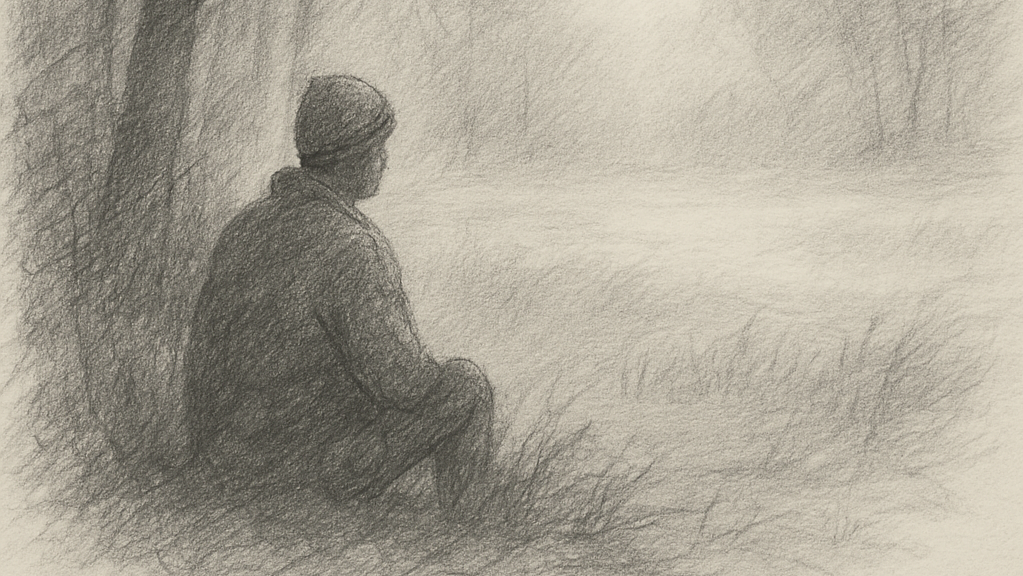
When I was seventeen, I spent time in Kenya on safari. A ranger shared a piece of advice that has stayed with me for more than three decades. He told me that the best way to watch wildlife was to sit quietly under a shady tree near water from dawn until dusk. Pick one spot. Stay put. Let the animals reveal themselves.
He added, almost apologetically, that he could not work this way because tourists expected constant motion in a 4x4, driving around in search of elephants, lions and leopards. It was not how wildlife really behaves. It was how people behave when they think wildlife should appear on demand.
That single conversation reshaped the way I see nature. He planted the idea that wildlife watching is mostly a stationary act. It is about noticing patterns, reading behaviour, choosing good ground and paying attention to what the landscape is already telling you. It is not about charging around hoping to bump into something.
Decades later, that simple lesson forms the backbone of how I photograph wildlife in Britain. Before I take a single step, I stop. I look. I listen. I let the land settle. Then I read it.
The method I use, and teach, is the S.C.A.N. method:
S – Stop and settle
C – Check wind and light
A – Assess signs and movement
N – Navigate your route
S.C.A.N. is not complicated. It is a mindset that slows you down, sharpens your senses and helps you move quietly through the habitats that wildlife depends on. It also reduces disturbance, which is central to ethical photography.
Below is how S.C.A.N. works in practice, woven with real examples from my own time in UK woodlands, pastures, hedges and fields. These moments are why I trust this method and why I encourage others to use it.
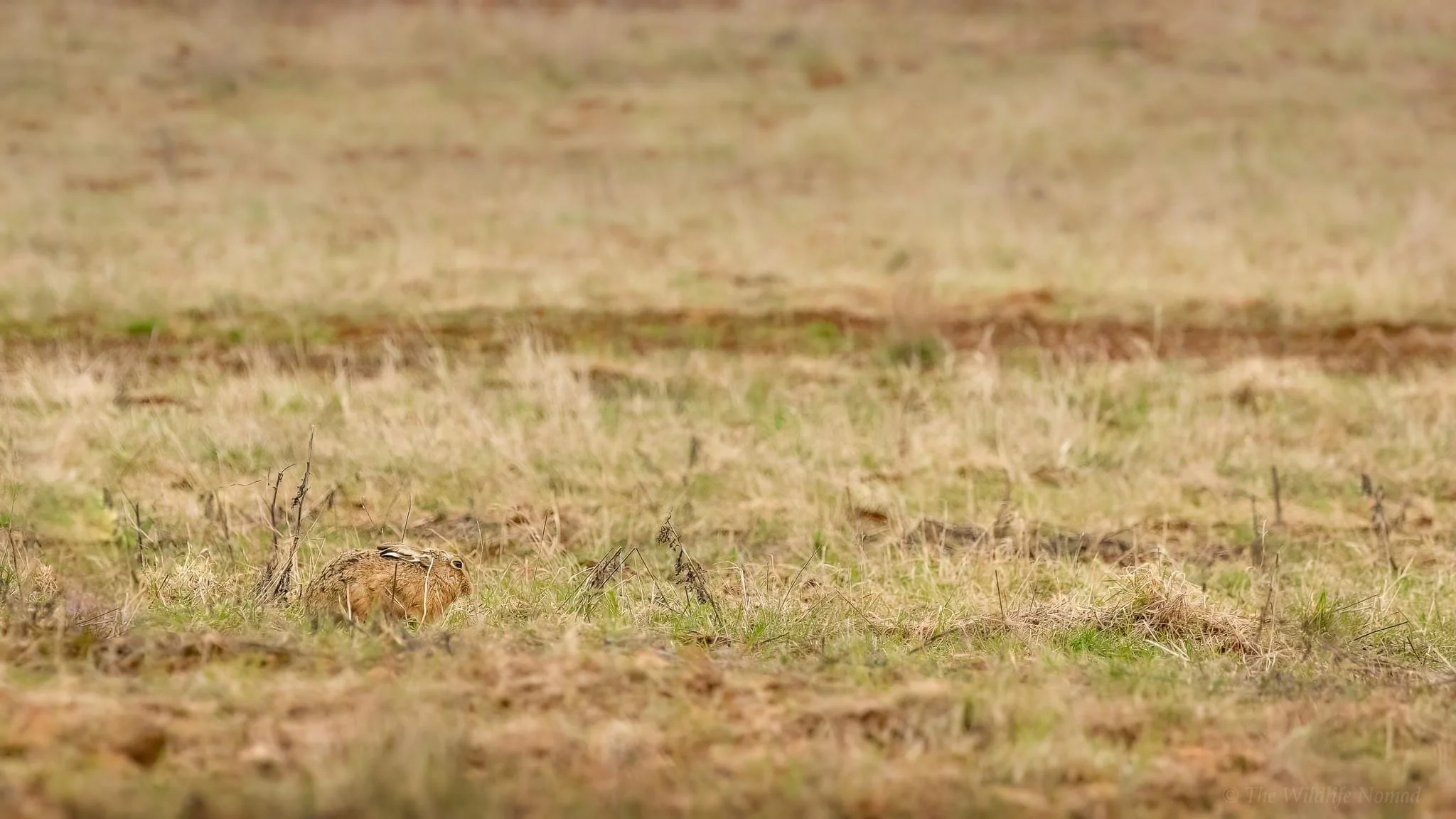
S.C.A.N. works in all habitats and all seasons and will reliably increase your chances of spotting and photographing more wildlife.
S – Stop and Settle
Stopping is the most underrated fieldcraft skill. Your arrival always creates a ripple. Birds pause. Mammals freeze. The tone of the landscape changes. If you keep walking, you fail to notice what was happening before you appeared.
Stopping resets the baseline. You begin to hear the real story.
The pine marten that appeared because I stopped
One summer morning before dawn, I was scanning towards the rising sun. It was still below the horizon and the air was cool. I was working out how quickly it was going to warm and how the light would fall. I was completely still, letting the land wake naturally. Something caught my attention to my right. Very slowly I turned my head. No more than twenty feet away stood a young pine marten, that I knew as “Pip” due to his bib markings. He was completely unbothered by my presence (as I was quiet and calm) and continued along the verge and climbed into a cherry tree.
For the next twenty minutes I watched that Pip and a red squirrel feed quietly in the same tree, no more than ten feet apart. Two animals that many would consider competitors, sharing the cherries in complete peace.
I would never have seen them if I had arrived “looking” for wildlife. I saw them because I had paused, scanned, and allowed myself to be calm and the world to settle around me.
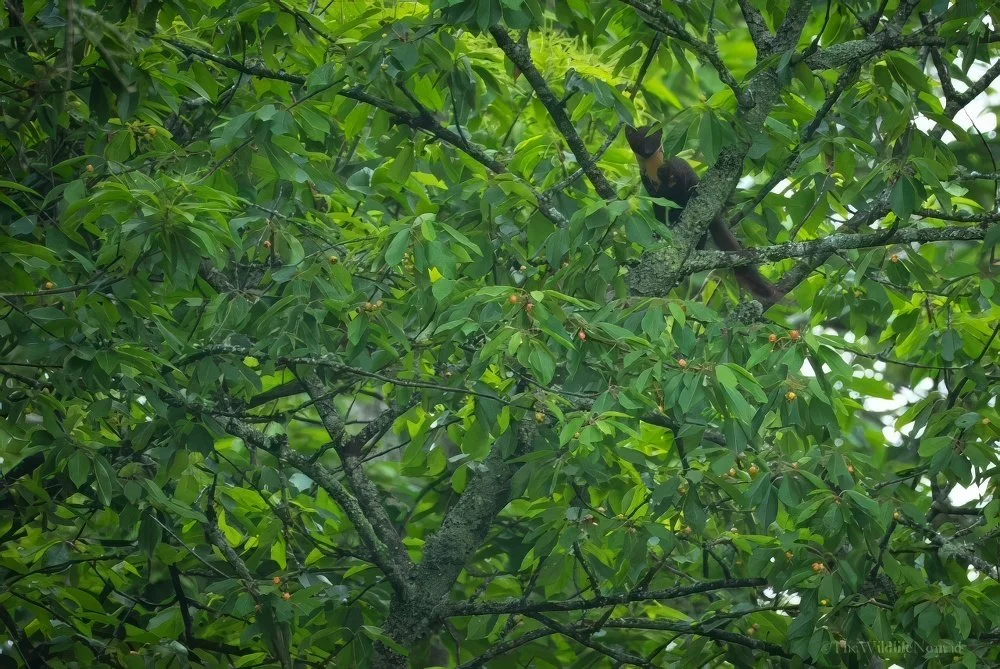
“Pip” the Pine Marten, foraging in the cherry tree some 50ft up.
What to listen for when you first stop
In Britain, the key early clues are audible long before they are visible:
Robins ticking
Blackbirds giving sharp “chucks”
Wrens rattling from bramble
Squirrels scraping on bark
Crows shifting position
Soft footfalls in leaf litter
Pheasants moving low under hedges
These baseline sounds tell you if the wildlife is relaxed or alert, and whether something is already moving nearby.
C – Check Wind and Light
Wind and light shape almost every wildlife encounter. Before I move, I check both.
Wind shows the safe routes
Wind carries scent and animals know it. A fox, roe deer or badger will often choose a route that keeps the wind favourable. Feeling wind on your face tells you whether your scent will drift into a hedgerow, funnel down a ride or spill into open ground.
Knowing this gives you an immediate understanding of which routes are likely to be used and which angles you should avoid.
Light reveals where animals will step
Early or late light creates a patchwork of safe and unsafe spaces.
In winter, deer often hold to shadow lines before stepping into soft, warming light. In summer, they avoid glare and favour shade or half-light. Birds feed first in brighter pockets. Owls float along the margins where light meets shadow.
Light also reveals detail. Pressed grass, disturbed dew and fresh slots stand out clearly when viewed from the right angle. Checking the light early helps you decide where to focus your attention next.
The woodland fox that moved exactly where the scan predicted
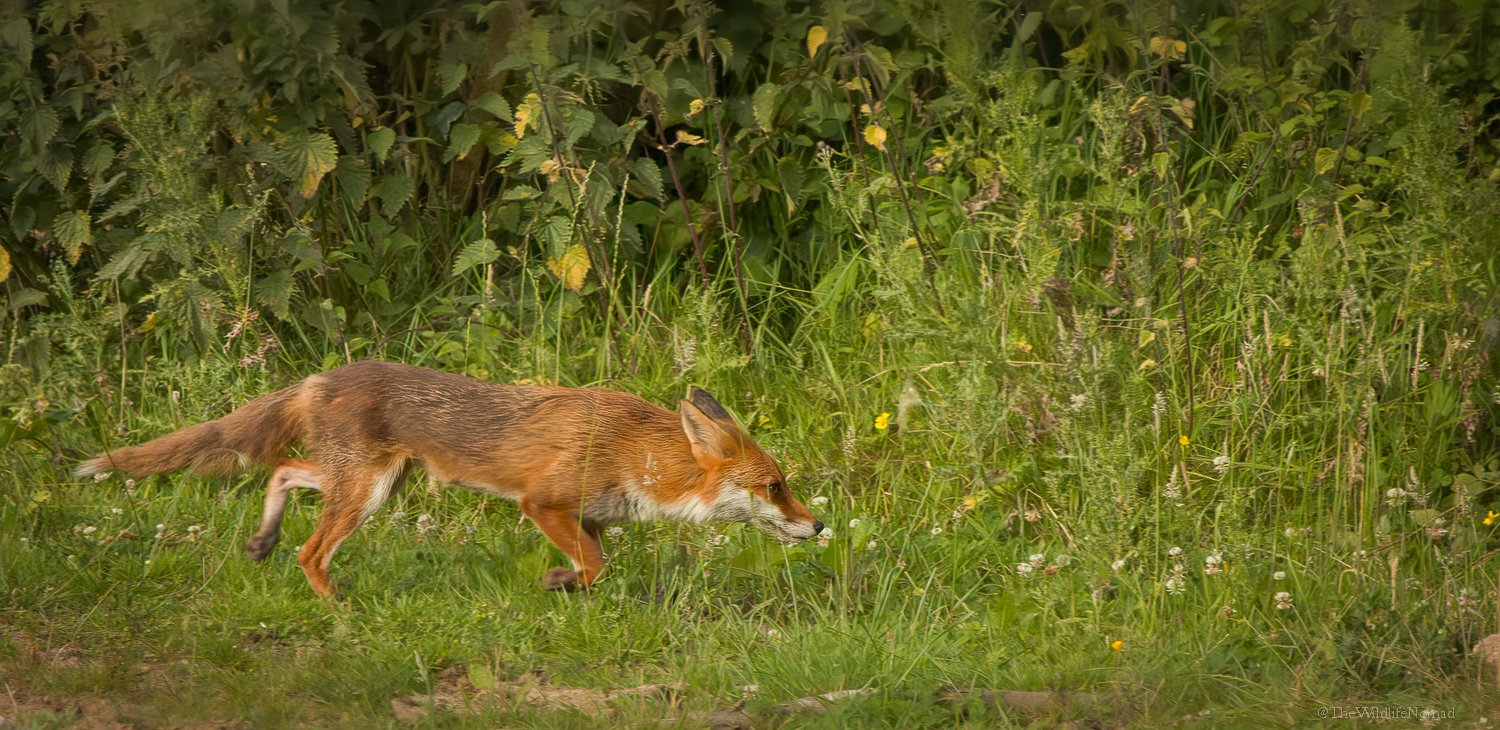
Late one afternoon near Greenwood, I was looking for signs of foxes and badgers in a woodland fringe. I stopped, worked through S.C.A.N. and began thinking like an animal: where is the cover, where is the last of the days warmth, where is the safety, where is the wind falling.
Moments later, a fox appeared on my left, moving exactly along the line I had predicted. It hugged the bank beneath holly and hawthorn, keeping low, in the last of the afternoon sun, warm but unseen.
I saw it because I had stopped long enough to understand the ground the way the fox did. Without that pause and check, I would have missed it completely.
A – Assess Signs and Movement
Once wind and light are understood, the land begins to offer clues.
Assessing signs means reading everything from obvious tracks to the smallest rustle of grass. Movement often gives more away than the animal itself.
Assessing signs in woodland
Woodland is full of subtle information:
Fresh bark flakes beneath woodpecker trees
Smooth tunnels through bramble
Hazel shells cracked by small mammals
Mud scuffs on rides
Sound carries differently under trees. A twig snap two ridges away can be more useful than a dozen rustles nearby.
Assessing signs in pasture
Pasture gives you distance but little cover. Signs reveal themselves clearly after damp nights:
Dew trails cutting across grass
Pressed patches where deer fed
Badger snuffle holes
Fox paths leading between tussocks
Footprints emerging in soft margin
Hidden red deer calf
One of my most memorable encounters with red deer came from a simple scan. I was out conducting pre-rut checks in September, trying to understand which locations the red deer where favouring in the evening and what might be the best spots to watch and photograph them from. I had been on site for around 2 hours and had only covered about two hundred metres as I was talking my time, constantly scanning and trying to keep myself out of sight of the herd.
I then realised that one of the red deer hinds was calling incessantly and looking about 50M ahead of me in the long grass. I stopped and scanned but couldn’t see anything obvious. However something just did not feel right, so I began to bely crawl forward. I stopped regularly to check the wind direction and scan again, and after a few minutes on my stomach I eventually spotted through my binoculars a young calf in the long grass. Because I was scanning before I moved, checking wind direction and looking for signs, I saw it before it saw me, so I was able to take a handful of shots.
I watched for five minutes and slipped away without disturbing it. It’s camouflage was incredible and that moment taught me a lot about the quiet habits of deer in open grassland.

Shot handheld whilst laid on my belly (with my big and heavy 200-800mm lens) this was a real challenge to capture, but luckily as I had been using the S.C.A.N. method I was able to approach unseen and leave without causing any disturbance.
Assessing signs in scrub and hedgerows
Hedges and bramble often hide the animal you are interested in. You rarely see it first, but you hear the alarms:
Wrens scolding
Blackbirds giving away movement in the understory
Jays and magpies sounding off from above
Many times I have heard a fox long before I have seen it. The hedge becomes your early-warning system.
Assessing movement without seeing the animal
Movement is your strongest clue:
A faint ripple in long grass
A tail flicking in bramble
A pheasant running instead of walking
A crow changing direction abruptly
Reed heads trembling in still air
These movements tell you far more than an exposed animal ever will.
The winter deer trail that led to a later sighting
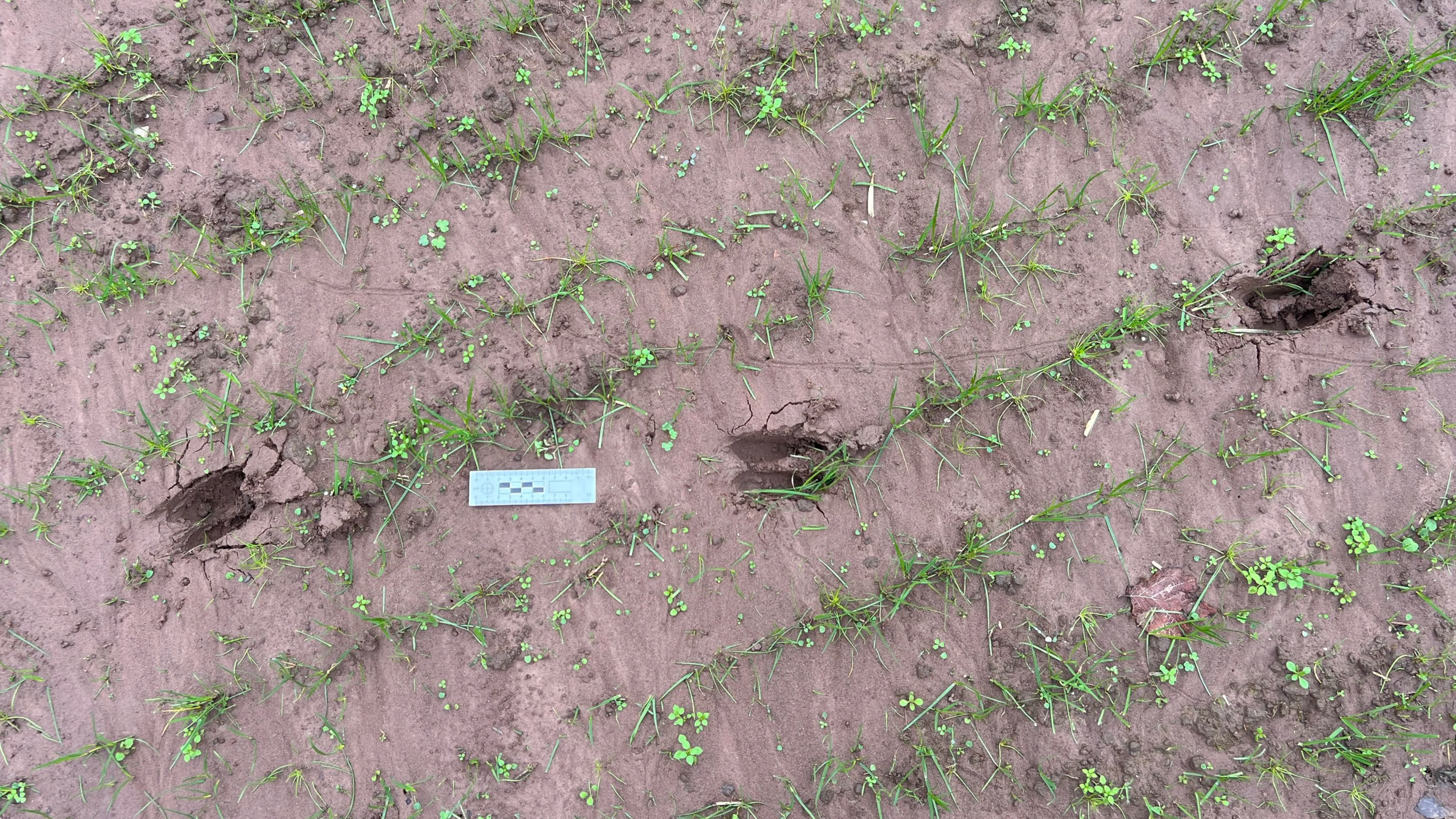
Only three weeks ago, I paused on a morning after very heavy rain and spotted fresh deer slots. They crossed a muddy field and headed through a hedge. I followed them with my eyes, scanned the pasture beyond and made a mental note that there was a large mixed wood on the opposite hillside.
Two days later I returned to the same gateway, later in the day, and scanned the direction the deer had taken, and there they were, about four hundred metres away, resting against the woodland edge in a sheltered corner. I found them because I had assessed the sign, stored the information and scanned again later.
N – Navigate Your Route
Only after stopping, checking and assessing do I choose how to move. Navigation is about minimising noise, avoiding detection and working with the land rather than blundering through it.
How to navigate with minimal disturbance
Avoid silhouetting yourself against skylines
Move along edges, not across open ground
Use dips, banks and tree trunks for cover
Step on soft substrate rather than brittle leaf litter
Keep the wind in your face or across your body
Pause regularly and re-run S.C.A.N.
Good navigation is quiet, patient and subtle………and often very slow!
The little owl found through years of scanning
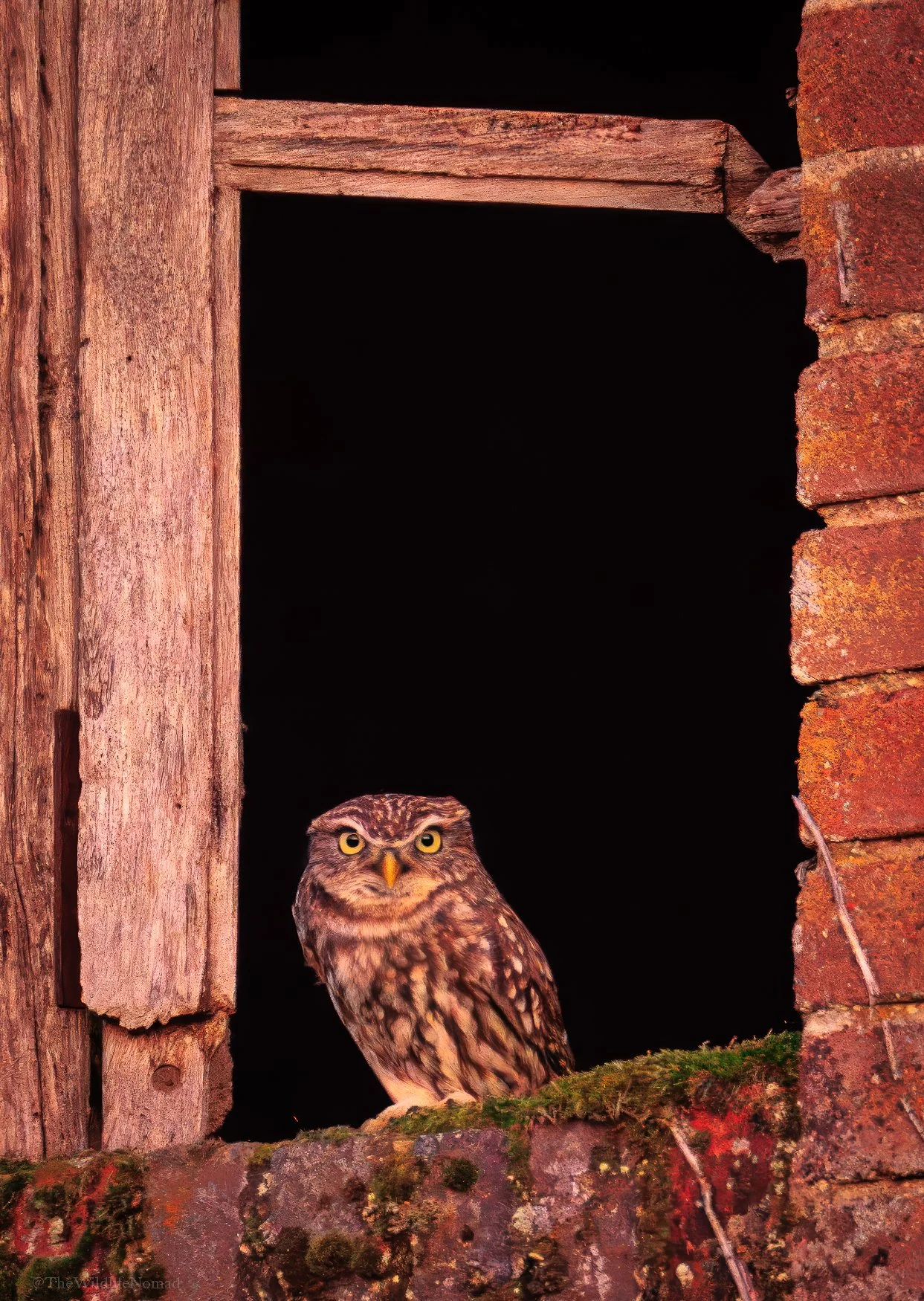
Years of scanning disused farm buildings in open farmland eventually revealed where a local little owl was hiding. I heard them often but never knew exactly where they roosted. By applying S.C.A.N. day after day, scanning the same structures from different angles, reading light and looking for fresh droppings and pellets, I eventually found the exact window ledge where the owl rested. I photographed it at dusk, perched calmly, exactly where the signs had suggested.
S.C.A.N. Works Because It Mirrors How Wildlife Uses the Land
Wildlife survives by reading light, wind, sound and cover. When you do the same, you begin to move in parallel with them. You reduce disturbance, understand patterns and see more natural behaviour. I have been photographing wildlife for around 35 years and actively tracking in Britain for about a decade. The more experience I gain, the more convinced I am that the first minute in any habitat is the most important one.
It is where the land speaks. It is where the clues lie. It is where your session is shaped.
Philosophy: Let Wildlife Reveal Itself
To me, letting wildlife reveal itself means slowing down enough to see the countryside the way animals see it. It means asking: where would I stand if I were a fox? Where would I shelter if I were a deer? Would I feed here if the wind were wrong?
It also means removing pressure and expectation. If you only walk one hundred metres in an afternoon, that is not a failure. The aim is not distance. The aim is understanding. Most people walk the countryside like they have somewhere to be. Wildlife photography asks you to do the opposite. It asks you to stay present, peel back the layers, and let the moment unfold.
That Kenyan ranger was right. The best encounters come not from searching but from watching, patiently, quietly and with care. SCAN gives you a way to do that in any UK habitat.
Slow down. Watch. Wait. Let wildlife reveal itself.
Other Blog Articles you Might Enjoy
Fieldcraft Friday: Part 1 - Fieldcraft and Ethical Wildlife Photography
Fieldcraft Friday: Old country wisdom for wildlife photographers
Microhabitats: How to Find Wildlife by Reading the Hidden Places Animals Use Every Day
————————————
FAQ: Fieldcraft, Scanning and Finding Wildlife in the UK
How do you find wildlife when you don’t know where to start?
Most people begin in the middle of a walk. By tht I mean they start walking and then start looking, which is often the worst way to spot wildlife. Start before yous set off and look at the land around you. Look at the field margins, ride junctions, hedgerow gates and stream crossings that all concentrate movement because they offer food, cover and escape routes. Spend a few minutes watching these “traffic nodes” before you do anything else. Even in unfamiliar areas, animals tend to choose the same safe routes day after day. Once you notice these patterns, the landscape becomes much easier to read.
What time of day is best for reading wildlife behaviour in the UK?
Dawn and dusk are still the richest windows, but not just because animals are active. The quality of light, the angle of shadow and the rhythm of birdsong all shift dramatically at these times and make behaviour easier to interpret. Dawn is best for spotting fresh sign, dew trails and quiet feeding. Dusk is ideal for watching routes develop as shadows lengthen. If you only have one hour a day to practise fieldcraft, choose one of these edges of the day.
How can you tell if a bird alarm is about you or another animal?
Birds give different alarms depending on the threat. If you caused the disturbance, blackbirds usually call once or twice and then fall quiet once you stop moving. Repeated alarm bursts that stay focused on the same spot usually point to another animal, often a fox, cat or bird of prey. Vertical movement in the alarms suggests something airborne. Horizontal movement suggests something on the ground. Listening for the direction of travel in alarms is one of the fastest ways to understand what is happening out of sight.
What is the easiest way for beginners to reduce disturbance while wildlife watching?
Pick a natural “anchor point” and stay there longer than feels comfortable. A fallen tree, a field gate, a dip in the bank or a patch of shade gives you a fixed perspective that animals get used to quickly. After five minutes of stillness, the countryside resets and animals behave normally again. Most disturbance happens because people keep walking. Stillness is the simplest, most effective low-impact technique for beginners. It is also how you start to notice the patterns that experienced naturalists rely on.
How do you choose the best place to set up for wildlife photography in open countryside?
Look for three things: shelter, structure and sightlines. Shelter keeps your scent and silhouette under control. Structure gives animals predictable movement routes, such as hedge corners, wall lines, tree belts or ditches. Sightlines help you read behaviour without stepping forward. A good location usually combines all three. If you stand somewhere that feels comfortable, hidden and quietly connected to the surrounding ground, it is usually the same place an animal will feel comfortable passing through.