

How to Watch and Photograph Red Foxes in the UK: Behaviour, Fieldcraft and Seasonal Tips.
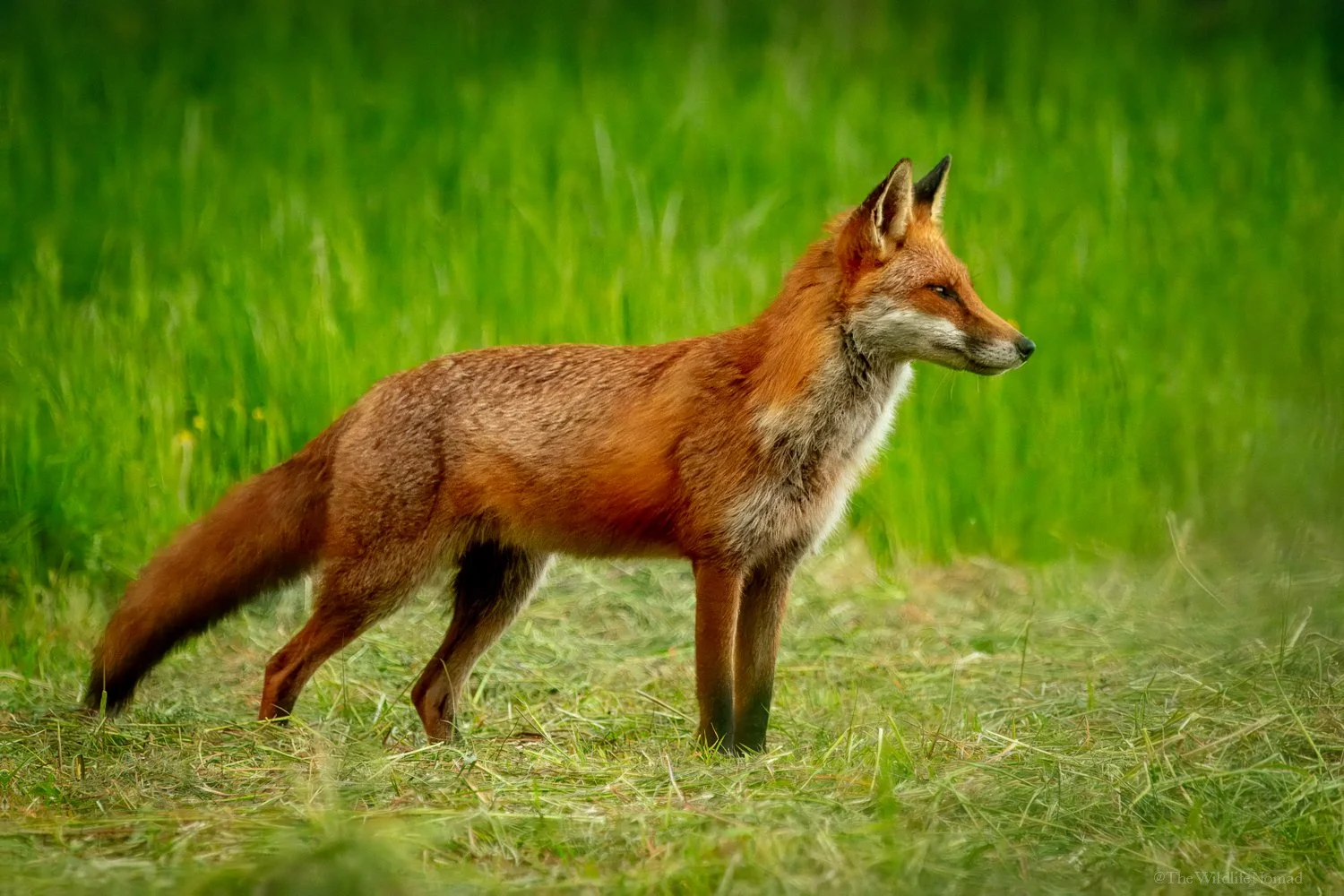
Introduction: A Life Spent Watching Shadows Move
I’ve been watching foxes for more than thirty-five years now, long before I owned a decent camera. They were the first animal that taught me the value of stillness. If you slow down, the land starts to move again. A hedge that looked quiet suddenly offers up a flick of russet. A single blackbird gives a sharp alarm. And then, right there on the edge of the field, a fox steps into its world as if it had been there all along.
The red fox is woven into our landscapes in a way few other mammals are. Woodland edges, farmland margins, village lanes and urban gardens all carry its scent. It’s familiar, but never predictable. And that is what keeps me going back, year after year, the sense that at any moment, a fox can appear and tilt the whole scene back toward the wild.
In this guide, I’ll share what decades of watching foxes have taught me about where they travel, when they're active, how to recognise the places they use and how to watch and photograph them without changing their behaviour.
Winter Courtship and the First Lesson in Patience
One of my earliest fox encounters came on a bitterly cold winter morning, years before I had the fieldcraft I rely on now. I’d stumbled across a dog fox and a vixen courting in the frost. They were comfortable enough to ignore me as long as I stayed still, which was both exhilarating and humbling. I watched them weave around each other with a quiet confidence that made the cold irrelevant. It was my first glimpse into how rich fox behaviour can be when you’re lucky enough to be allowed close.
Moments like that don’t happen often, but when they do, they stay with you for a lifetime.
How Foxes Move Through a Landscape
Foxes rarely move through a landscape at random. Like most wildlife, they make choices that balance three things: food, ease of movement and risk. Once you start looking at the countryside in those terms, the places where you are most likely to encounter a fox become much easier to predict.
In rural areas, pay particular attention to woodland edges, hedgerows, field margins, tracks, streams and other linear features. Research using GPS-tracked foxes has shown that they frequently follow features such as forest edges and roads when they encounter them. These features can provide easier travel, access to feeding areas and, in some cases, cover.
This is why I rarely begin by asking, “Where are the foxes?” Instead, I look at the landscape and ask, “If a fox wanted to travel through here without unnecessary effort or exposure, where would it go?”
A hedge connecting two patches of woodland is more interesting than an isolated hedge. A sunken lane running between feeding areas may be more useful than an exposed field. A gap in a fence, gateway, stream crossing or narrow strip of cover can concentrate movement even further. None of these features guarantees a fox will use them, but each helps narrow down a large landscape into places worth investigating.
Then I look for evidence.
Fox prints, scat, scent marking, hair caught on fences and well-used trails can turn a promising landscape feature into something much more significant. Repeated signs at the same location are particularly useful because foxes maintain territories and regularly scent-mark within them.
Food availability also changes the equation. Foxes are highly adaptable omnivores, feeding on everything from rabbits and small mammals to invertebrates, fruit and carrion. A productive rabbit warren, recently cut field, fruiting hedgerow or other concentrated food source can temporarily alter where a fox spends its time. The routes themselves may remain useful, but the fox's reason for travelling along them can change with the seasons.
This is an important distinction when trying to find foxes. Habitat tells you where a fox could travel. Field signs tell you where one has travelled. Food, cover and seasonal conditions help you predict where it might travel next.
That is far more useful than simply wandering through good fox habitat hoping one appears. The aim is not to predict the exact position of an animal. It is to identify the parts of the landscape where the odds of an encounter are significantly better.
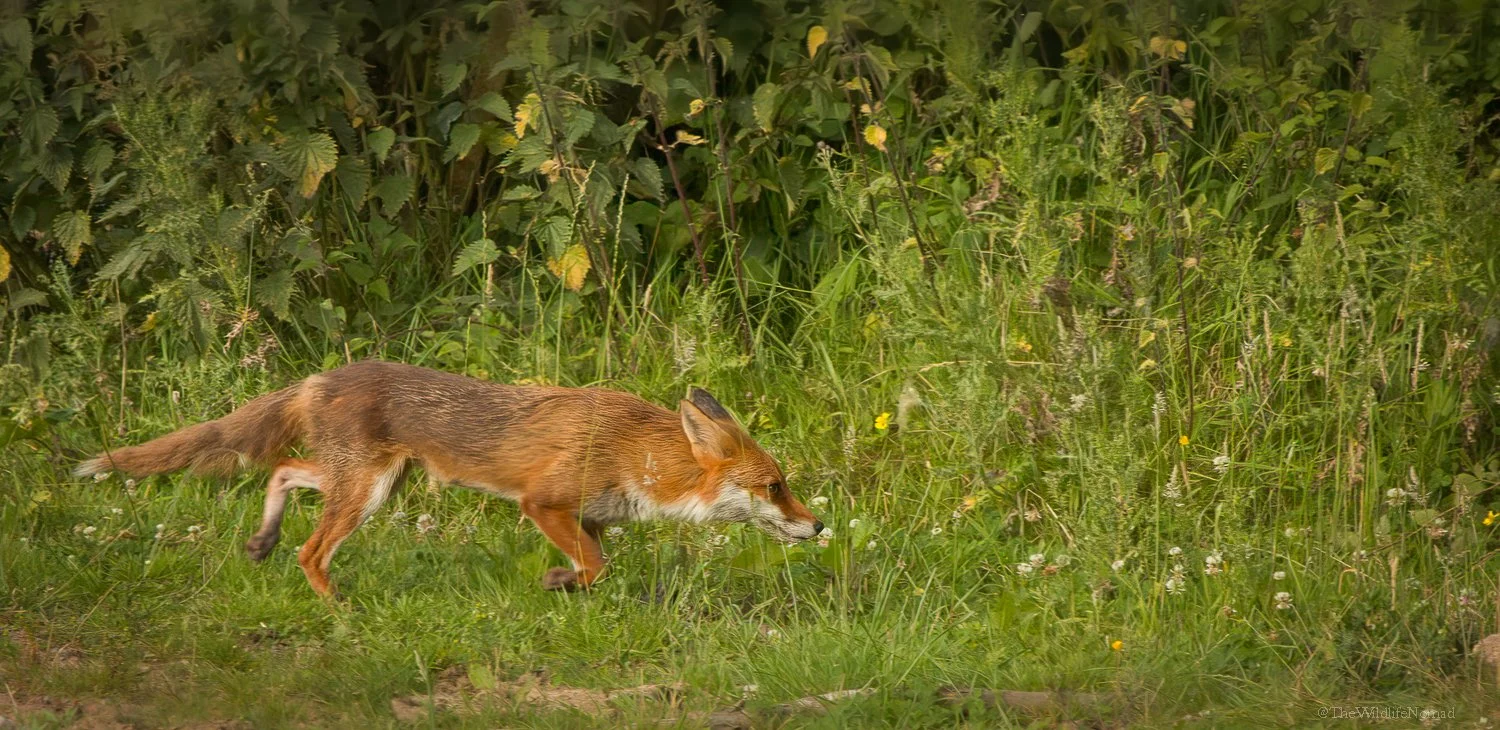
Your Local Patch: The Sunken Lane and the Scent-Marked Rock
Around my home in the Wye Valley, foxes favour a sunken lane that runs between two farmland fields. It’s sheltered, rich in scent posts and gives them safe passage between woodland and open ground. I see them there more than anywhere else. There’s a smooth rock just beyond my gate that they scent-mark almost daily. On still mornings you can smell the faint musk long before you reach it.
I’ve yet to find their earth locally, though I suspect they occasionally use an old badger sett as a lay-up site. There’s often a whiff of fox mixed with the deeper, earthier scent of badger in that area. They rarely stay long, just enough to rest or escape disturbance, but the signs are there for anyone looking closely.
Seasonal Shifts: Purpose in Winter, Ease in Summer
After three decades of watching them, the rhythm of the fox year is something I feel as much as see. Winter foxes travel with intent. Food is harder to find, territories tighten, and you can sense the urgency in their movement. If snow falls, their tracks form a narrow, direct line through the landscape. I once followed a trail for almost a kilometre in fresh powder, the fox never deviating more than a few degrees, as if drawn along a wire.
Summer foxes, by contrast, seem almost casual. Food is abundant. Beetles, worms, fallen fruit and careless young rabbits keep them going. I often think of summer foxes as relaxed……not lazy, just unconcerned. They know the land will feed them.
At dawn and dusk they’re active, as everyone expects, but I’ve seen enough foxes in broad daylight to know that “crepuscular only” is a myth. If you’re out there and moving slowly, you’ll see them. Stillness is a currency foxes respond to far more than time of day.
Voices in the Night: Screams, Gekkering and Barks
Fox sounds are part of winter in the countryside. The vixen’s scream, even heard at a distance, has a way of cutting through the dark that can raise hairs. I’ve never heard one at close range, but even across a valley it feels ancient and sharp.
I’ve also heard cubs gekkering (a harsh, argumentative chatter) but under different circumstances. Years ago, I volunteered as a rescuer for the National Fox Welfare Society. One day I found myself temporarily caring for nine cubs being moved between centres. Hearing them interact, even in transport cages, gave me a new appreciation for their social complexity. These weren’t mute creatures scratching out a solitary life; they were vocal, expressive and full of personality.
The single contact bark is more subtle. I hear it occasionally in the field, but I don’t rely on it when positioning myself. It’s simply part of the background conversation of the land.
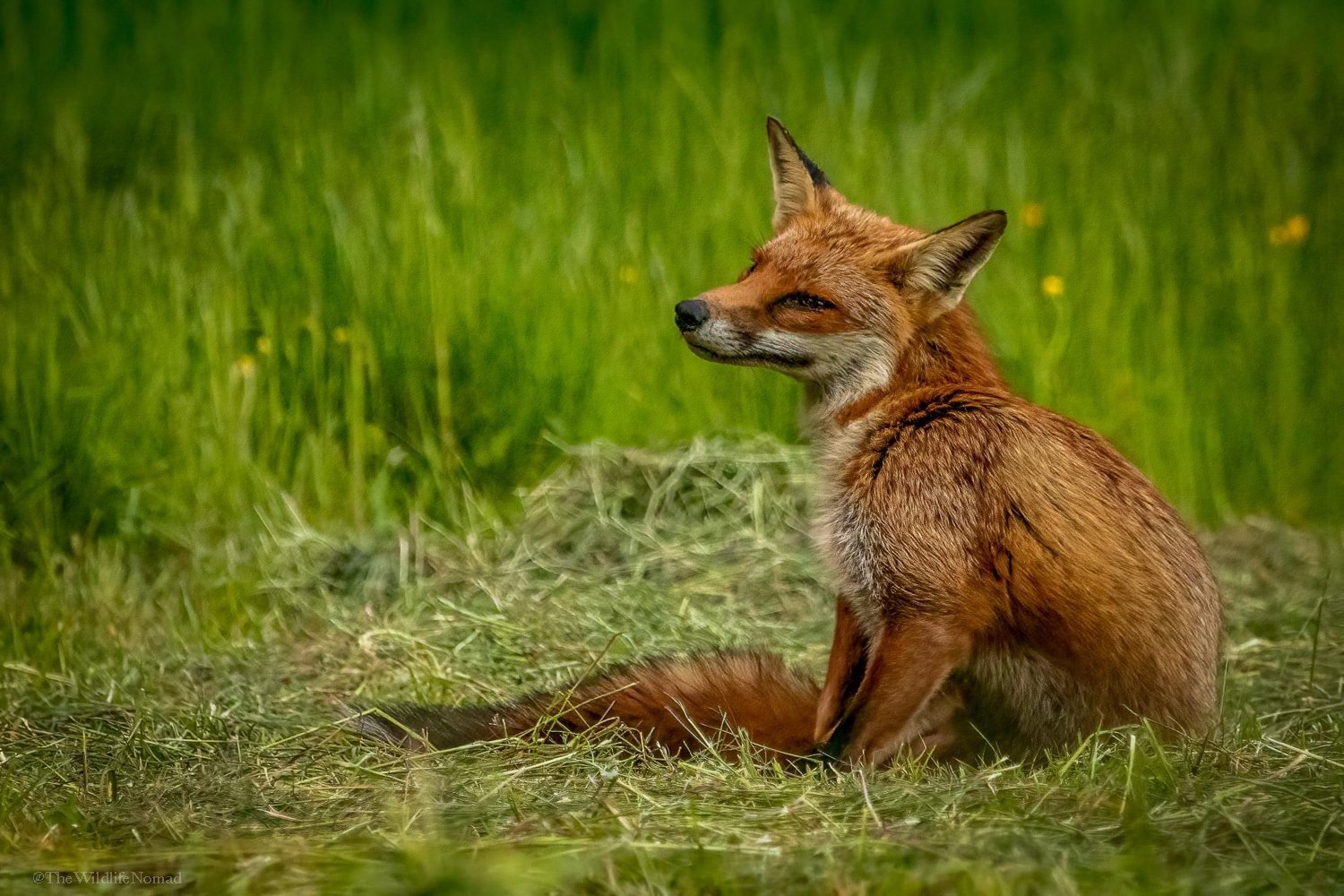
Photography in the Fox Hour: Light, Ethics and Long Lenses
When it comes to photographing foxes, my go-to lens is the Canon RF 200–800mm, partly for reach and partly for the flexibility it gives me when a fox decides to approach rather than retreat. This comes with it’s challenges as this lens is F9 at its longest reach, which means often I choose to shoot at F10 to get the best from it. This is one reason I prefer early sunlight (your light levels are always improving, rather than at dusk when they are getting worse by the minute). Foxes when hunting are not quick movers, they linger, they pause, they listen, so you can afford to shoot down at 1/500 if you’ve got solid support, or decent image stabilisation.
This lens is a physically long combination when attached to a camera body, so ordinary photography bags do not always accommodate it properly. I’ve compared three camera backpacks I’ve tested with the RF 200–800mm for photographers facing the same problem.
I’ll happily sit in good cover for an hour at dawn, waiting for that light to line up with a fox’s movement. But what matters more than any setting is how the fox feels. I make a point of backing off the moment I sense unease: the head lifting too sharply, the ears angling towards me, the stillness that isn’t relaxation but calculation. I’ve put the camera down more times than I’ve pressed the shutter in those moments.
If a fox is uneasy, you’ve already lost the image, and worse, you’ve altered its behaviour. I’d rather watch an undisturbed fox than photograph a nervous one.
Scent, Trail Cameras and the Quiet Technology of Tracking
Trail cameras have become part of my daily fox work, both in the UK and at my property in France. Around Greenwood, my cameras have shown that foxes often move with purpose between about 11 pm and 3 am, though I also catch them at dawn, and occasionally in the middle of the day when I’m out and still.
Even with black-LED cameras, they seem aware of them. More than once I’ve watched a fox stop, tilt its head and listen — who knows maybe they can detect the faint hum of circuitry we assume is silent.
At Le Mas in France, one of the surprises was discovering foxes and hedgehogs feeding side by side, barely acknowledging each other. Behaviour like that stays hidden without the silent eye of a trail camera. You can learn how to choose and set up a trail cameras in this blog.
Sarcoptic Mange: The Quiet Killer Too Few Notice
Mange is something I’ve encountered both in France and in the UK, and it can be brutal. Early signs include persistent scratching and patches of hair loss, often becoming increasingly obvious as the condition progresses.
Sarcoptic mange is caused by microscopic mites that burrow into the skin, causing intense irritation, hair loss and secondary infection. In severe cases, affected foxes can eventually die from the consequences of the disease.
If you encounter a fox showing signs of mange, give it space and consider reporting it to a local wildlife rescue organisation. By the time the symptoms become obvious, the animal may already have been affected for some time.
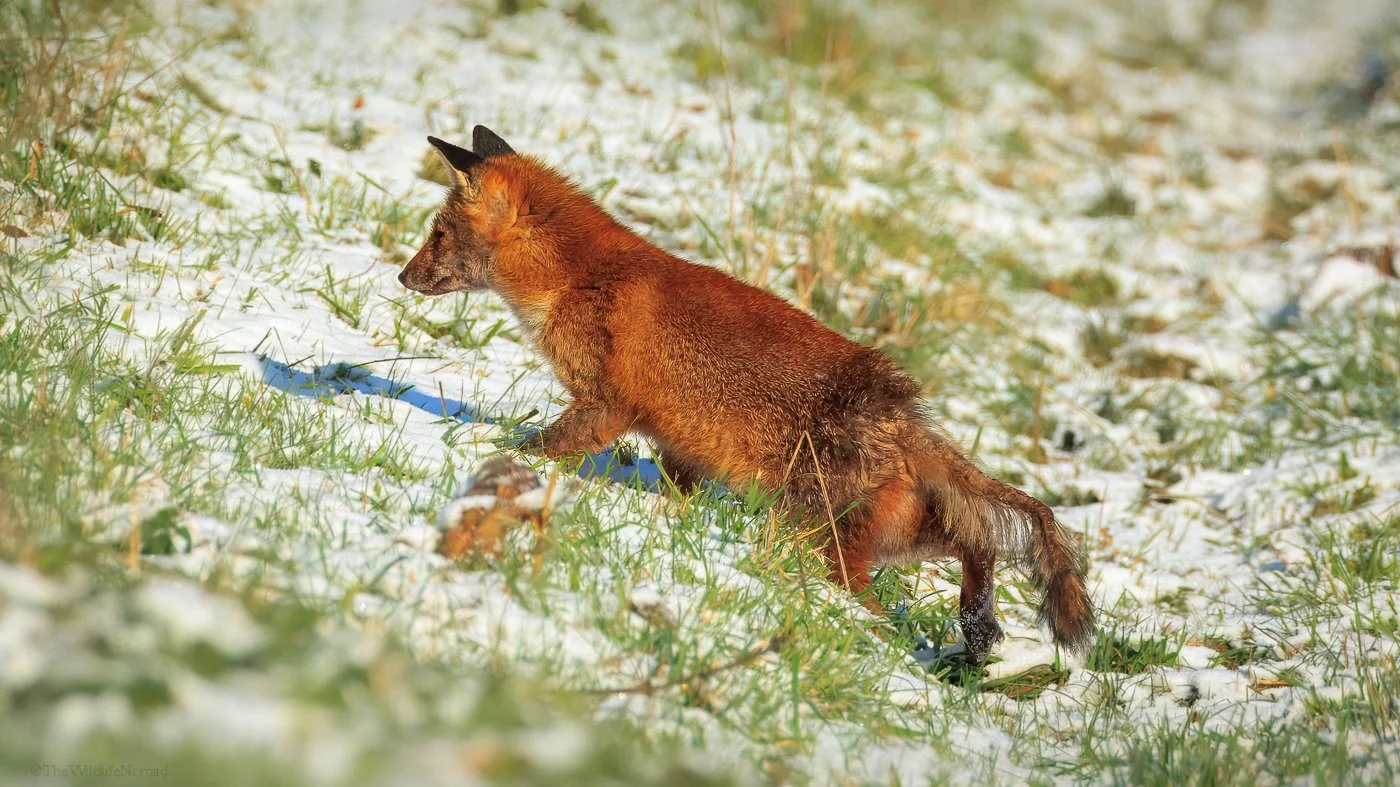
Why Foxes Endure
For all their challenges, traffic, persecution, mange, shrinking habitat, foxes endure. They’ve adapted to farmland, woodland edge, suburb and city centre with the same quiet confidence. Watching a fox thread the edge of a misted field at first light reminds me why I keep returning to them. They move with purpose, self-assurance and a kind of grace that’s easy to overlook until you slow down enough to truly see it.
My job, as a photographer and naturalist, isn’t to chase them. It’s to understand them. To know the wind, the land, the rhythms of the year. To step back when I should. To observe rather than intrude. And on the best mornings, to let the fox reveal its world on its own terms.
Slow down. Watch. Wait.
The wild is still there, moving in the lanes and hedges just beyond the house. Foxes are the proof.
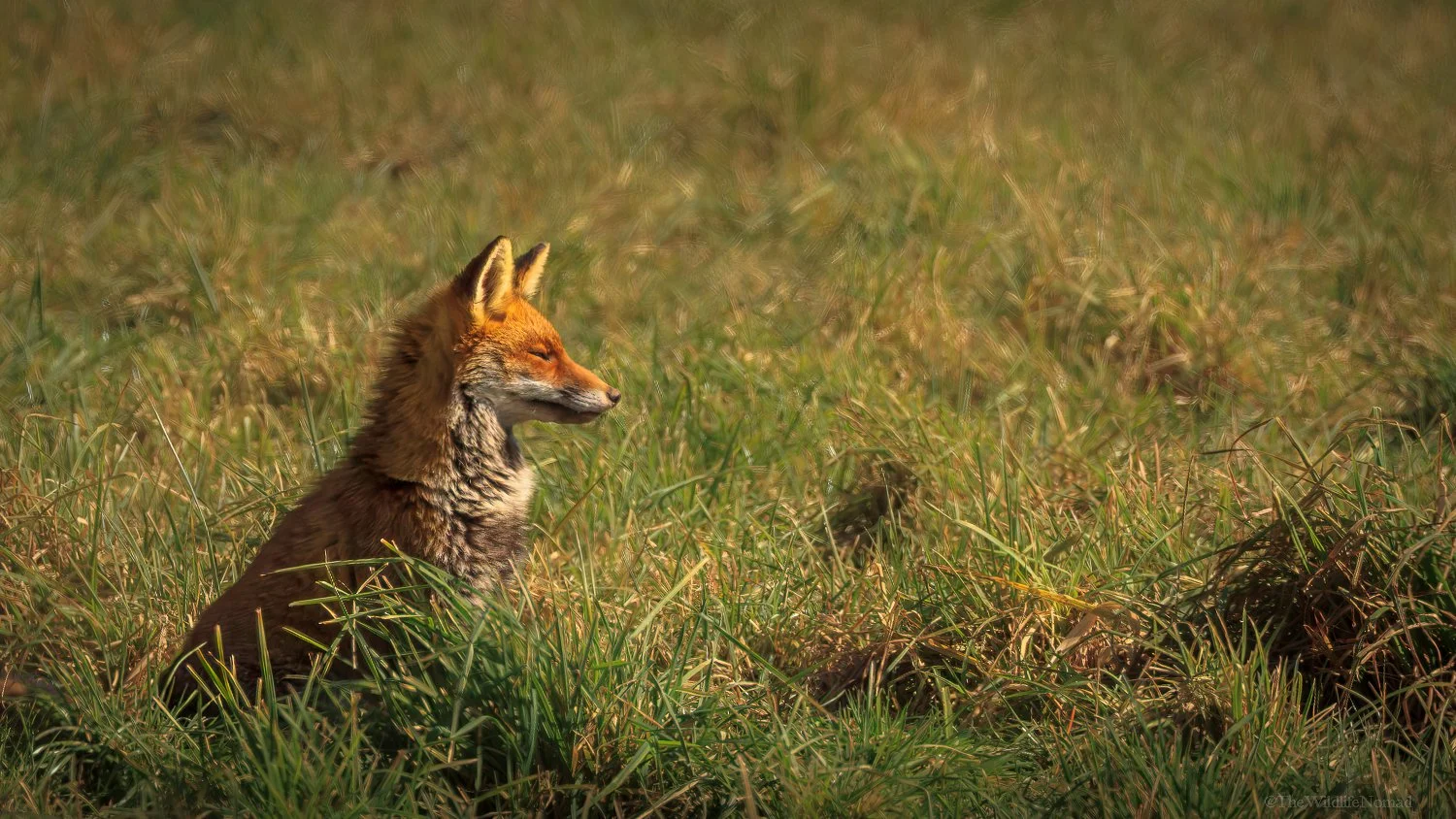
You know your fieldcraft is working when you capture an image of a country fox, sat upright, napping in the afternoon sun
Other Blog Articles of Interest
Fieldcraft Friday: Differentiating between Dog and Fox Tracks
Species Spotlight: In Search of the European Wildcat
Species Spotlight: Badger Ecology & Field Signs
——————————————————-
FAQ: Watching and Photographing Red Foxes in the UK
Where is the best place to see wild foxes in the UK?
Foxes favour edge habitats, so your best chance is in places where two landscapes meet — the outer margins of farmland, the edges of small woods, overgrown field corners, and quiet rural lanes. Urban foxes often use allotments, cemeteries and railway verges around dusk. Rather than looking for “fox hotspots,” return to the same area repeatedly; foxes follow habitual routes, and you’ll only recognise these patterns by revisiting a small patch often.
What time are foxes most active for wildlife watching?
Fox activity peaks around dusk and early nightfall, but UK foxes aren’t strictly nocturnal. In areas with low disturbance they can be active at any time of day, especially in late winter and early spring when food demands rise. To increase your chances, arrive early and remain still for at least twenty minutes — many sightings are missed because people move too soon. Foxes respond far more to movement than to shape.
How close can you get to a wild fox without disturbing it?
The comfortable distance varies widely depending on the fox and the landscape, but as a general rule, if the fox stops, lifts its head or changes its walking rhythm, you’re inside its alert zone. Most truly wild rural foxes notice a person at 20 to 40 metres. Use wind direction to your advantage, stay low, and avoid making eye contact. The goal is not to approach but to be present without altering behaviour — that’s when you get natural sightings.
Do foxes return to the same routes and territories?
Yes. Foxes are creatures of routine and will often walk the same hedgerows, field margins and access points night after night. These routes usually follow vole-rich grass strips, sheltered banks or boundaries that allow them to move unseen. Look for repeated scat placement or narrow “runs” through grass. Once you identify a fox corridor, you can predict movement far more accurately and plan your photography around it.
Is it safe to photograph a fox with a long lens, and will it scare them off?
Photographing foxes with long lenses (400–800mm) is generally safe as long as you remain still and avoid sudden movement. The sound of a shutter or the shift of a lens barrel is more likely to disturb a fox than your presence itself. Work from a seated or kneeling position, use natural cover, and resist the urge to track the fox too actively through the viewfinder — small lens movements can give you away. If the fox is relaxed enough to show natural behaviour, you’re at the right distance.